
Why Bangkok is in a China guide
Because almost nobody flies to Asia for one city. If you’re planning the mainland with our China itinerary — Chengdu’s clubs, Beijing’s hutongs, Shanghai’s ballroom — the smartest move on the map is to end the trip three hours south, in the one city in Asia where the volume knob turns the other way. Bangkok is everything the mainland scene deliberately isn’t: out loud, on posters, legally married since January 2025, and running on an internet with no wall around it. After ten days of reading the room in China, you land at Suvarnabhumi, your phone just works, and by midnight a drag queen on Silom Soi 4 is roasting your haircut in three languages. The whiplash is the point. Our China vs Thailand explainer makes the full comparison; this guide is the practical half — how to actually do Bangkok, and how to bolt it onto a China route without wasting a day.
And Bangkok has never been an easier add-on: direct flights run daily from every city in our flagship series — Chengdu, Chongqing, Xi’an, Guangzhou, Shanghai, Beijing, Hong Kong and Taipei all connect nonstop in 2.5–5 hours, usually for less than a domestic Chinese leg costs in Golden Week. Everything below was cross-checked against venue channels and 2026 listings as of July 2026; the short version with the map lives on our Bangkok hub.
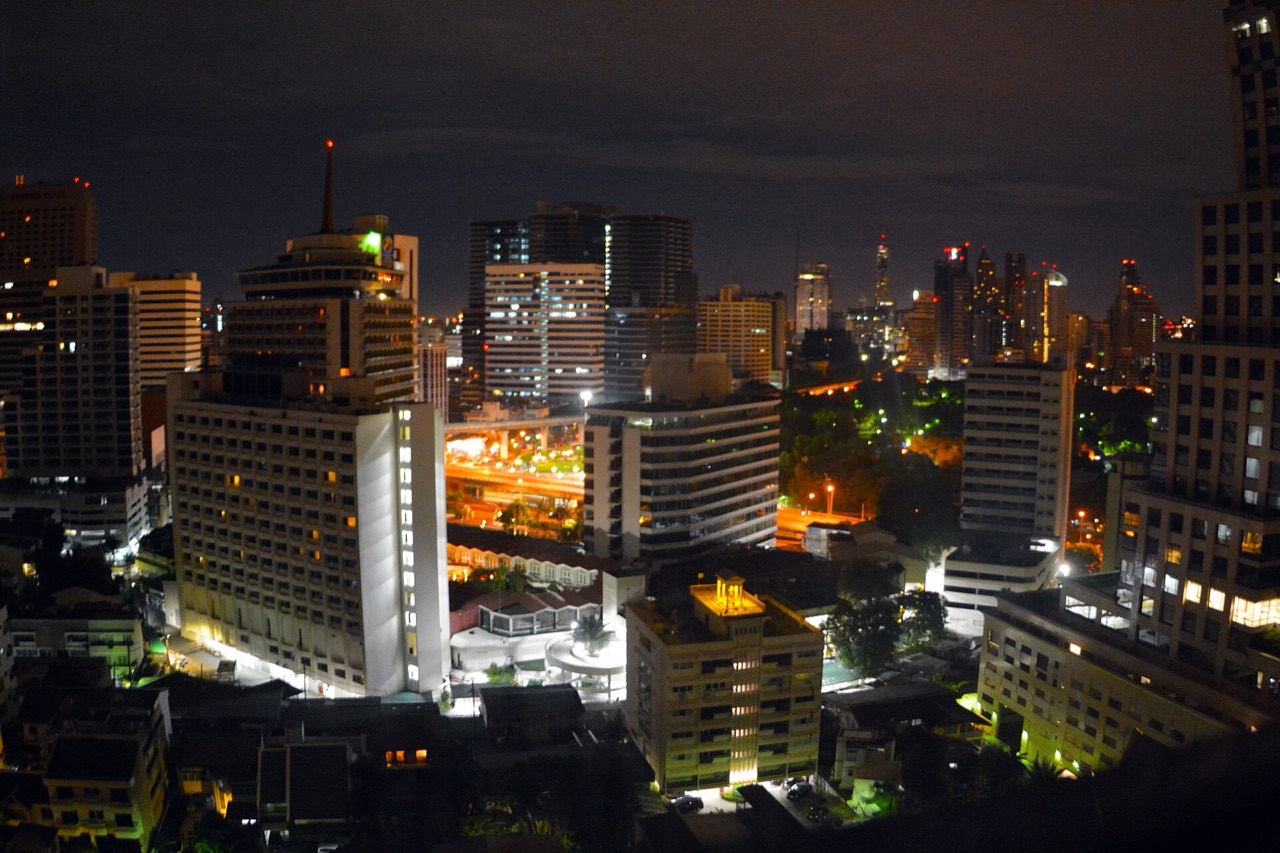
Being gay in Bangkok: the questions everyone asks
Is Bangkok actually as gay-friendly as they say?
Yes — with one honest asterisk. This is the most openly queer major city in Asia: dedicated gay venues by the dozen, drag on primetime TV, rainbow crossings in June, and a Pride parade that has grown from 20,000 people at its 2022 relaunch to over half a million in 2026. Nobody blinks at two men holding hands on the BTS. The asterisk is that Thai society’s famous tolerance coexists with ordinary Thai reserve — the exuberance is real, but it lives mostly in the entertainment districts and among the young. You’ll never feel unsafe; you’ll occasionally feel like a guest at someone else’s very well-run party, which is roughly what you are.
What did marriage equality actually change?
Thailand’s Marriage Equality Act passed in 2024 and took effect on 22 January 2025, making it the first country in Southeast Asia — and still the only one — where same-sex couples marry with full adoption and inheritance rights. Thousands of couples have married since, including a mass wedding at a Bangkok mall on day one. For you as a visitor the practical change is atmosphere: the scene now operates with the settled confidence of a community the law is on the side of, and honeymoon Bangkok is officially a thing (our honeymoon guide pairs it with the mainland’s romance stops). The contrast with the mainland’s legal picture could not be starker — which is exactly why the pairing works as a trip.
Where is the gay scene?
One postcode, gloriously concentrated: Silom, in Bang Rak, around Sala Daeng BTS / Silom MRT. Two small side-streets do most of the work — Silom Soi 4 for terrace bars, drag and people-watching, Silom Soi 2 for the clubs — with the saunas scattered a short ride away and a second, more local wing out along Ratchada in the north-east. You can walk the whole core scene in five minutes, which after China’s taxi-ride-between-venues geography feels like a cheat code.
Do the apps work? What about my VPN?
Everything works. Grindr, Scruff, Tinder, Google, Instagram, WhatsApp — Thailand has no firewall, so the entire connectivity kit you assembled for the mainland (eSIM, VPN, app workarounds) simply retires the moment you land. Grids in Silom are dense and very international; Thai men use the same apps plus LINE for chat. The only cultural note: profiles here are commercial as well as social — massage boys and freelancers advertise openly — so read intentions before you invest an evening.
What’s on the events calendar?
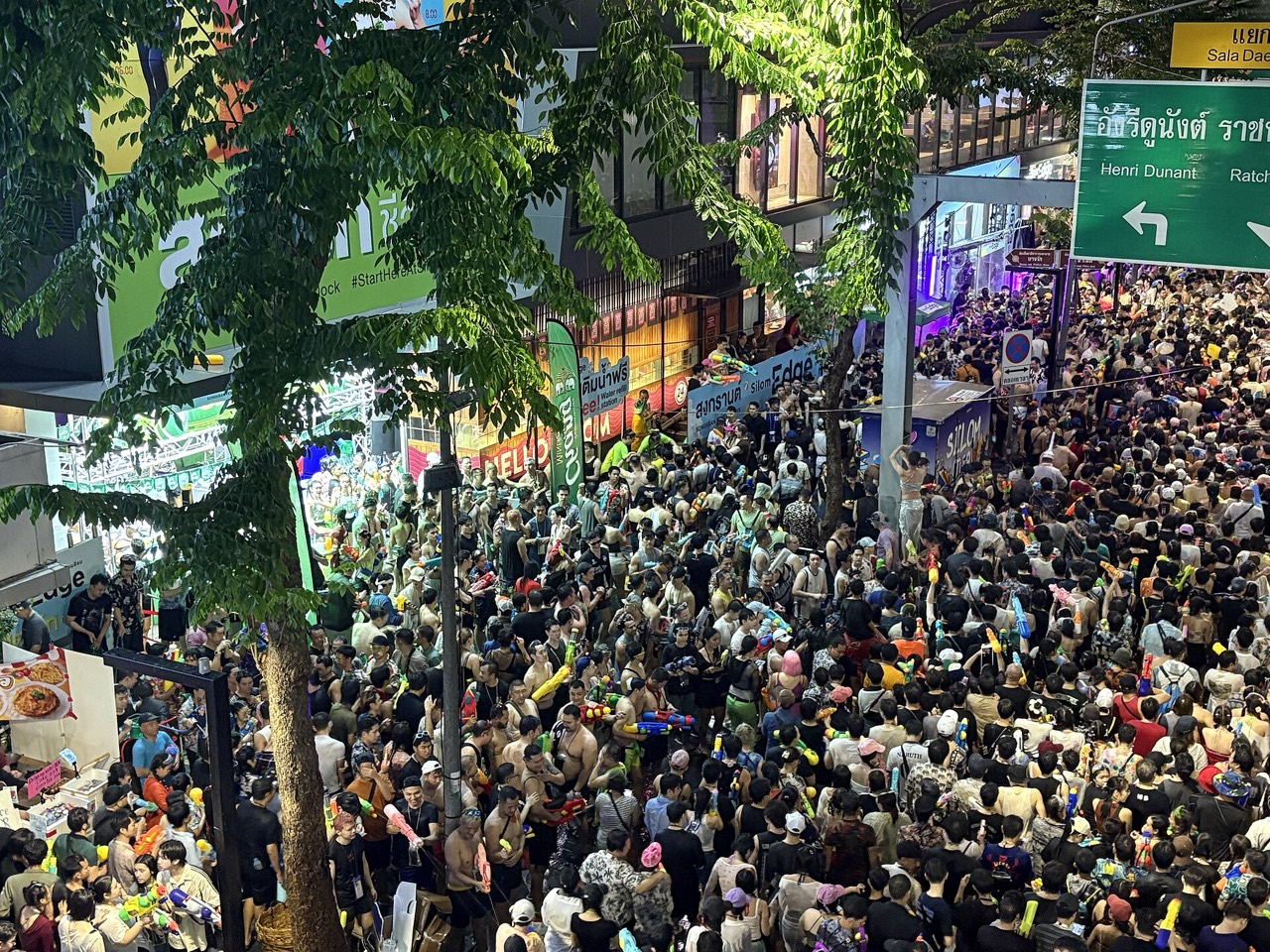
The two giants: Bangkok Pride, late May into June — the 2026 parade ran from Silom to the National Stadium with a record 500,000+ crowd — and gCircuit at Songkran, Asia’s biggest gay circuit festival, four days of arena-scale parties over the Thai New Year water festival in mid-April (the 2026 edition, its 20th anniversary, filled the EmSphere mall’s arena and pool decks). Between the two peaks, the weekly rhythm carries itself: nightly drag at The Stranger Bar and Circus, House of Heals’ hotel-rooftop drag cabaret, and Sunday gay night at Maggie Choo’s. Nothing here hides on WeChat — it’s all on Instagram, loudly.
Do I need a visa?
Most Western passports enter visa-exempt — but the window is in flux: Thailand ran a generous 60-day exemption from 2024, and in May 2026 the cabinet approved winding it back to 30 days for most nationalities, pending final publication. Thirty days is still triple what most China-plus-Thailand routes need; just check the current rule when you book. Chinese passports travel visa-free both directions under the 2024 mutual waiver — relevant if you’re travelling with a partner from the mainland.
Pairing Bangkok with China: the routes that work
The trick is sequencing. Bangkok works best as the last stop — decompression, not warm-up — because doing it first makes the mainland’s discretion feel like a comedown instead of a fascination. Three pairings we’d actually book:
The southwest run (our favourite): Chengdu and Chongqing for a week — the mainland’s best scene plus the 8D city — then the 3-hour nonstop from either into Bangkok for the weekend. Chengdu–Bangkok is one of the cheapest international hops in Asia.
The classic circuit: Beijing → Shanghai by rail, fly Shanghai–Bangkok (4.5h). Empire, then art deco, then Silom. Two weeks, three completely different queer worlds.
The Greater Bay warm-up: Guangzhou or Hong Kong into Bangkok (2.5–3h) — short enough that weekenders from both cities treat DJ Station as a local. Pattaya’s gay beaches bolt on from Bangkok by minibus if you want a coda.
Budget note: Thailand runs cheaper than the mainland for nightlife and street food, pricier for Western-style hotels in the tourist core — line-item comparison in our costs guide and the regional ranking in best gay cities in Asia.
Where the scene lives: gay Bangkok’s geography
Learn three names and you own the city:
Silom Soi 4 — the theatre row. A hundred metres of open terraces where the evening starts: The Balcony’s street tables on one side, Circus’s drag theatre and The Stranger Bar’s queens further in, everyone auditing everyone else’s table over ฿69 happy-hour beers. It’s the single easiest gay street in Asia to walk into alone — by your second drink you’re in somebody’s conversation. The lane wakes at 6pm and hands over to Soi 2 around midnight.
Silom Soi 2 — the engine room. Two lanes east: a dead-end alley that is essentially one continuous club queue by 11:30pm, with DJ Station as the main hall and G Bangkok just off it on Soi 2/1 running until dawn. Everything charges a cover, every cover includes drinks, and everyone ends up here eventually. Between the two sois, the Surawong side-streets hold the surviving show bars — the descendants of the old Soi Twilight strip.
Ratchada — the Thai wing. Twenty minutes north-east by MRT (Huai Khwang), a parallel scene that tourists rarely reach: Fake Club’s model revues, R3’s theme-night sauna, and a crowd that’s younger, louder and almost entirely local. Go once — it recalibrates your sense of whose city this is.
Everything is pinned on the Bangkok hub map; base yourself near Sala Daeng and the whole core scene is a five-minute walk.
The clubs: Soi 2 after dark
DJ Station — the institution
DJ Station has anchored Silom Soi 2 for nearly three decades and remains the single most famous gay club in Asia — three packed floors of dance-pop, a midnight cabaret show that’s a genuine rite of passage, and a crowd that mixes half of queer Asia with the rest of the world on any given Saturday. Doors from about 8pm but dead until 11; entry runs ฿300–400 including two drinks (cheaper midweek), and they do check photo ID — carry your passport or a photo of it. It’s touristy, it’s chaotic, and it’s still, honestly, one of the great nights out on the continent.
G Bangkok — the after-hours
When Soi 2 closes, the night decamps around the corner to G Bangkok (the club formerly known as G.O.D. — “Guys On Display”, and yes, they deliver). Three floors of harder, circuit-leaning music running to roughly 5:30am, a largely shirtless crowd, and the cruisiest upper floor in central Bangkok. Two honest warnings from every reviewer ever: it gets crushingly full at peak, and smoking is permitted inside. Come at 2am when everywhere else dies; this is where the night ends.
Fake Club — the Thai side
Fake Club is the one worth leaving Silom for: a cavernous show-club out on Ratchada (the city’s Thai-facing gay wing, near Huai Khwang MRT) where model-grade go-go boys work a giant stage for a young, trendy, almost entirely Thai crowd. Table service culture — budget about ฿1,000 a head in a group for a bottle set-up — and almost no tourists, which is precisely the appeal. Pair it with R3 sauna nearby and you’ve seen the Bangkok most visitors never do.
The bars and the shows: Soi 4’s theatre row
The Balcony is where every Silom night starts — street-side terrace tables, ฿69 happy-hour beers until 8pm, karaoke upstairs and four decades of practice at making solo travellers feel like regulars. Circus Soi 4 across the lane is the street’s big reinvention: the beloved Telephone Pub (1987–2020, famous for the table phones you used to ring strangers across the room) didn’t survive COVID, but its space came back louder as a drag theatre-restaurant running six shows a night, seven nights a week — dinner, burlesque and lip-sync in one sitting. The Stranger Bar, the self-styled House of Drag Queens, does the craft version: close-up, sharp, genuinely funny drag nightly (sets from ~9:30pm, ~฿500 in with two drinks) in a recently quadrupled space that still feels intimate.
Two beyond the soi: House of Heals, drag superstar Pangina Heals’ own cabaret on the 33rd floor of the Renaissance Ratchaprasong by Chit Lom BTS — polished, big-budget drag with a skyline behind it, shows most nights around 10:30pm — and Maggie Choo’s, the gorgeous 1930s-Shanghai speakeasy under the Novotel Fenix Silom whose Sunday gay night (~฿500 with two drinks) is the classiest end to a Bangkok weekend. A note for mainland-route readers: Maggie Choo’s pastiche of old Shanghai is best enjoyed after you’ve seen the real thing on the Bund.
The go-go bars, handled honestly
Bangkok’s male go-go and host-bar economy is real, legal-adjacent, and part of the scene’s history — the old Soi Twilight strip is gone to redevelopment, but show bars survive around Silom and Surawong. Our house position: adults making informed choices deserve respect, not squeamishness — and also not romanticising. If you go: venues charge a first-drink cover (฿300–500), performers earn from drinks you buy them and tips, “off fees” are a separate commercial arrangement, and clear sobriety about what’s transactional protects everyone. Treat performers as staff, not scenery; tip the show even if you’re only watching; and if a situation involves anyone who seems underage or unwilling, leave and say so. The clubs and drag rooms above offer a full Bangkok night with none of these calculations — the choice is genuinely yours here, which is itself the point of Bangkok.
A queer legacy, Thai-style
Bangkok’s openness isn’t an import — it grew from a culture that never criminalised same-sex love in the modern era (the last sodomy provision died in 1956, unenforced long before) and that has recognised kathoey — trans and third-gender people — as a visible, named part of society for generations. Visibility isn’t the same as equality, and Thai queer activists spent decades closing that gap: from the first campaigns of the 1990s and early 2000s, through the cabaret-to-primetime rise of Thai drag — crowned when Drag Race Thailand launched in 2018 with Pangina Heals as host, later the first Thai queen on the global stage — to the marriage-equality bill finally signed in 2024. When it took effect on 22 January 2025, couples married in a Bangkok mall at midnight with government ministers applauding. That arc — patient, theatrical, ultimately victorious — is very Bangkok.
The city is also the world’s quiet capital of gender-affirming care, drawing trans travellers and patients from every continent to its clinics — one more way Bangkok functions as the region’s pressure valve. If your route includes the mainland, our trans travel in China guide maps the contrast honestly.
One pilgrimage for the historically minded: nothing marks the site of Babylon, the garden sauna that defined an era of gay Asia from 1987 to 2020 — but ask any Bangkok gay man over thirty-five about it, buy him a drink, and enjoy the eulogy. Cities remember through their people here.
The night-out playbook
Time it Thai: terrace hour on Soi 4 from 7pm, drag sets 9:30–midnight, Soi 2 clubs peak midnight–2am, G Bangkok till dawn. Cover charges include drinks almost everywhere (฿300–500 / two drinks is the pattern), so the door price is friendlier than it looks. Carry photo ID — Soi 2 doors card enthusiastically regardless of your grey hairs. Getting home: BTS stops ~midnight; Grab is cheap, everywhere and safe at 4am; agree tuk-tuk prices before boarding or skip them at night. Money: cards work in clubs, cash rules on the soi — no mainland-style app wall, but ATMs charge ฿220 a pull, so draw big. Manners: Thailand runs on kreng jai — keep your voice warm, your complaints private and your wai returned, and doors open everywhere. And the one real hazard of gay Bangkok is simple over-service: drinks are strong, the night is long, and the city will happily let you find your own limit.
Saunas: after Babylon
First, the eulogy: Babylon — the garden bathhouse that was, by broad consent, the greatest gay sauna on earth — closed in the pandemic and the building is gone. Nothing replaced it, and honesty requires saying nothing has. What Bangkok still has is a working, legal, listed sauna scene that would count as excellent anywhere else:
Chakran (Ari, north Bangkok) is the upscale heir — resort-style, with a pool, jacuzzi, gym, maze and the city’s first men-only rooftop onsen, drawing a sleek Thai-and-visitor crowd since 2000 (฿380–500). Sauna Mania is the Silom-side workhorse five minutes from the bars — five compact floors, gym, rooftop, busiest early evening (฿320–420, more on foam-party nights). R3 out on Ratchada Soi 3 is the local secret: young Thai crowd, weekly theme nights from underwear Wednesdays to naked Sundays, and almost no tourists. First time in any Asian bathhouse? The rituals differ from Europe’s — our bathhouse etiquette guide covers the universals, and the regional saunas guide ranks the field. For massage, the reliable route is the upmarket spa tier — the dedicated gay-massage picture is covered honestly in our Asia massage guide.
Where to stay
Same-sex bookings are a non-event everywhere in Bangkok — the only real decision is geography. Silom / Sala Daeng is the obvious base: you walk home from Soi 2, and the Novotel Fenix Silom (the one with Maggie Choo’s in the basement) plus a dozen mid-range towers sit within five minutes of the strip. Riverside is the romance option — the Chao Phraya grande dames put Wat Arun outside your window at triple the price and a 15-minute ride from the scene. Sukhumvit (Asok–Phrom Phong) suits mall-lovers and gCircuit-goers — EmSphere is right there — with the BTS connecting you to Silom in 20 minutes. Book Silom for a first visit; you’ll thank yourself at 3am.
Daytime Bangkok, between recovery naps
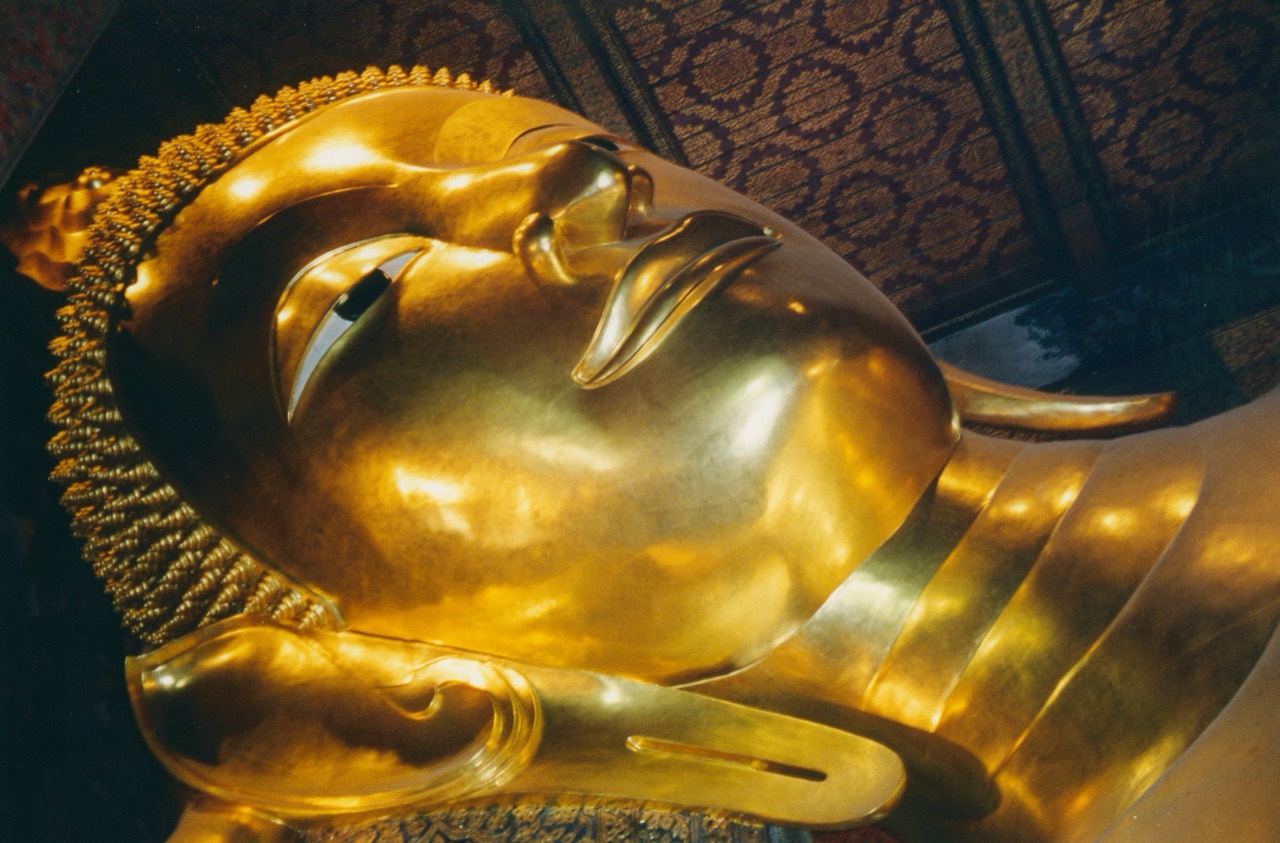
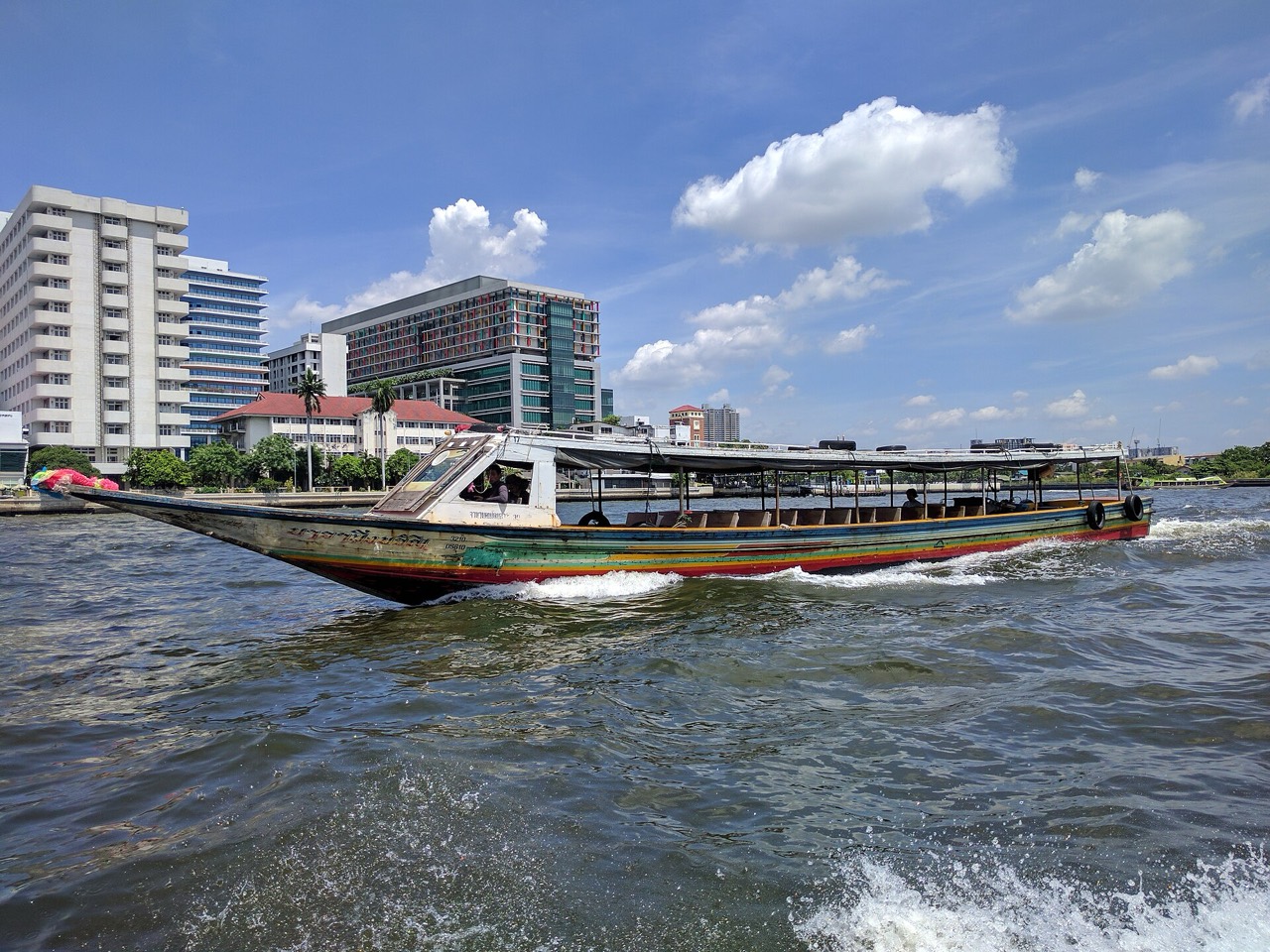
Do the royal triangle once, properly: Grand Palace (go at 8:30am opening, dress covered, ignore anyone outside saying it’s closed — that’s the oldest scam in Thailand), then Wat Pho next door for the 46-metre reclining Buddha and a traditional massage at the temple school that invented the syllabus, then the two-baht ferry across to Wat Arun for sunset — the prang you saw at the top of this page. Ride the river: the Chao Phraya express boats are the best ฿30 in Bangkok; get off anywhere that looks interesting. Shop like a local: Chatuchak weekend market is 15,000 stalls of everything (go early, follow the vintage sections), and the malls from Siam to EmSphere are air-conditioned civilisation when the heat wins. One quiet one: the Jim Thompson House — the silk-trader-spy’s teak compound — is the city’s most graceful hour, and queer history adjacent at that.
And use the lungs: Lumphini Park starts literally at the top of Silom — dawn tai chi, evening runners, two-metre monitor lizards patrolling the lakes like they pay rent — and the new Benjakitti wetland park connects to it by skywalk. A 7am loop around Lumphini is the classic Silom recovery ritual: sweat out the night, watch the lizards, be horizontal again by nine.
Eat like Bangkok wants you to eat
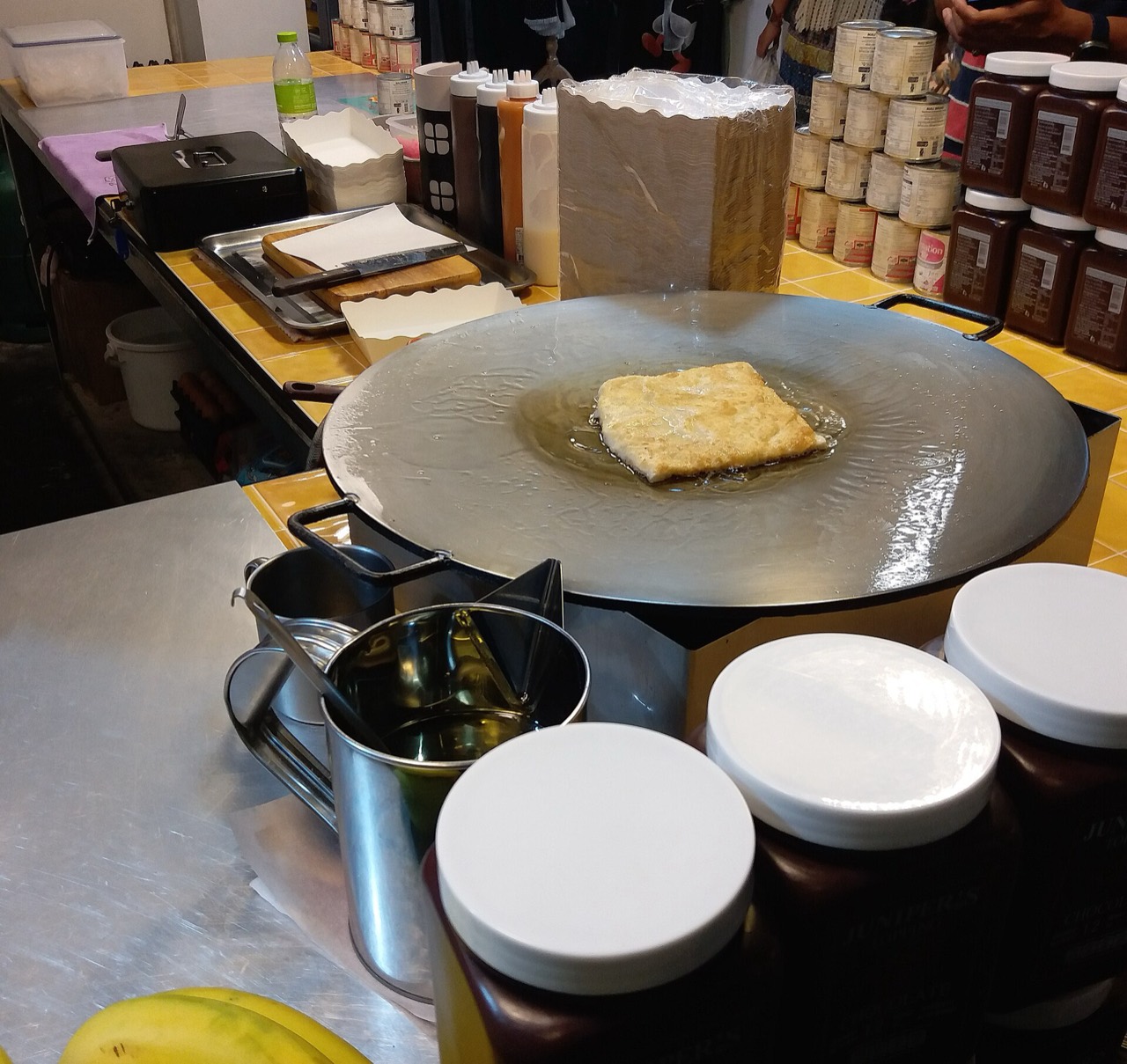
Bangkok street food needs no introduction, so here’s just the gay-route version: Yaowarat (Chinatown) at night is the great feed — go hungry, follow queues, end with mango sticky rice; the som tam and grilled-chicken shophouses off Silom’s sois handle pre-club dinner; boat noodles at Victory Monument are the ฿20-a-bowl institution; and the banana roti griddles that appear outside the clubs after midnight are the city’s official recovery food. The famous shophouse restaurants (crab omelettes, Michelin queues) reward planning; the genius of Bangkok is that the ฿60 pad kra pao at the corner without a name usually doesn’t lose the comparison. Coming from two weeks of Sichuan heat? Thai spice is a different weapon — phet nit noi (“a little spicy”) is the phrase that saves you.
Day trips
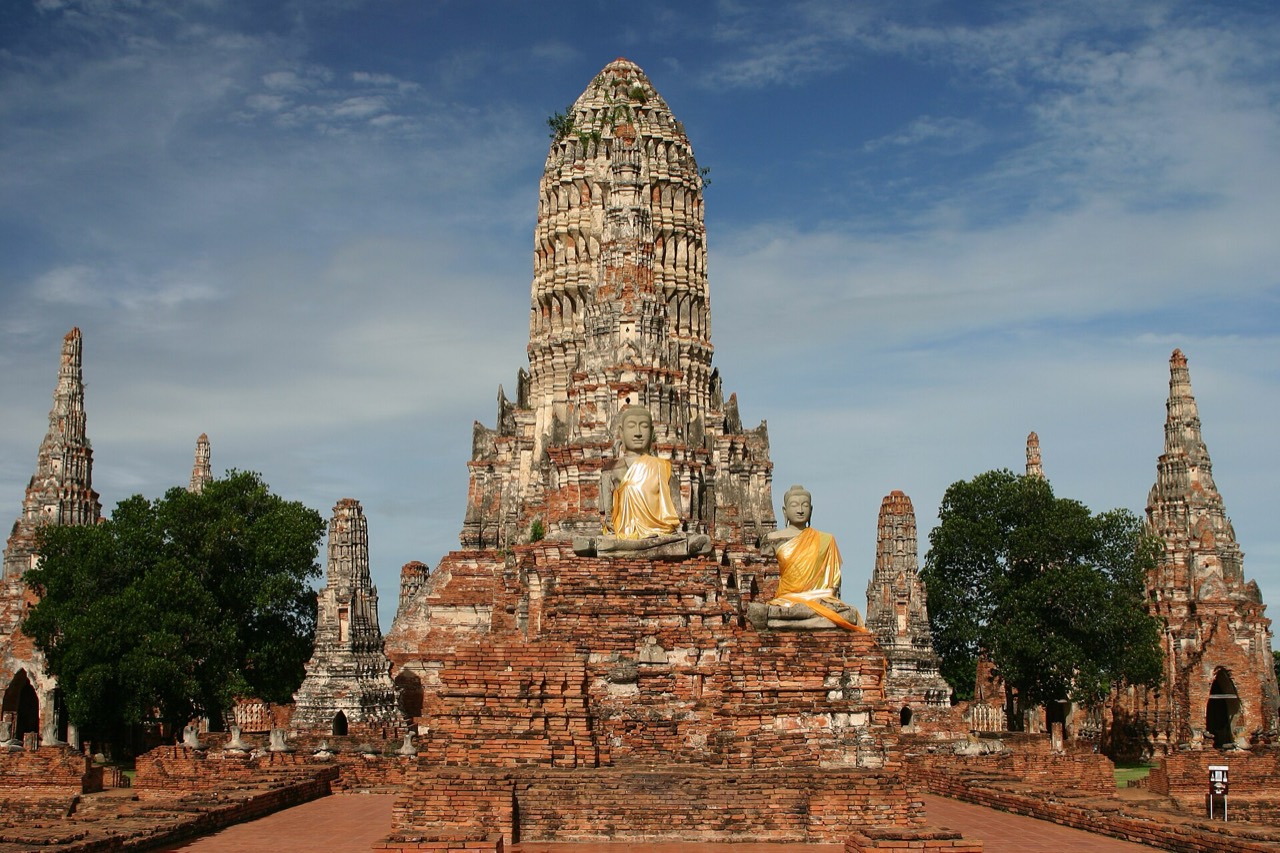
Ayutthaya is the essential one: the ruined 400-year capital, 90 minutes north by train or minivan — rent a bicycle among the headless Buddhas and be back for the drag show. The floating and railway markets (Damnoen Saduak, Maeklong) photograph better than they feel but pair well as a half-day. And Pattaya–Jomtien, two hours southeast, is the region’s beach-scene annex — a full gay beach culture of its own that deserves its own trip report rather than a rushed afternoon. Northbound long-haulers: Chiang Mai’s gentler scene is an hour’s flight, and the regional guide maps the wider circuit.
TL;DR: the practical machinery
Getting in and around
Two airports: Suvarnabhumi (BKK) for most international arrivals — Airport Rail Link to Phaya Thai in 26 minutes, then BTS — and Don Mueang (DMK) for budget carriers. The BTS/MRT grid covers everything in this guide (Sala Daeng/Silom for the scene); Grab fills the gaps for pennies. Visa: most Western passports visa-exempt — 60 days at time of writing, with a cut to 30 approved and pending; check before booking. When to come: November–February is the cool, dry sweet spot; April is furnace-hot but it’s Songkran/gCircuit; late May–June is Pride.
Money, phone, health
Open internet, so your only telecom task is a ฿300 tourist SIM or eSIM at arrivals. Cards widely accepted, cash for street food and sois; tipping is light (round up, ฿20–50 for good service). Tap water no, ice yes (it’s factory ice), 220V with universal-ish sockets, and pharmacies are excellent — PrEP and sexual-health services are famously accessible at clinics like the Thai Red Cross’s anonymous clinic, a regional model. Watch the two classic hustles (gem shops and “the palace is closed” tuk-tuk detours), keep your wits about your drinks on the sois, and Bangkok is as safe as big cities get.
The bottom line
Bangkok isn’t the discovery — everyone already knows. It earns its place in this series as the exhale: the city where the discretion you practised so carefully on the mainland becomes, for a few loud nights on a small pink street, completely unnecessary. Do China for the scene nobody expects, then Bangkok for the one everybody deserves. 慢慢来 on the mainland; sabai sabai down here. Same wisdom, different volume.


