
Xi’an on its own terms
Let’s be straight with you the way we were about Beijing: Xi’an is not a gay-scene city, and anyone who sells it as one is selling you something. The scene here is one dependable club, a handful of app-organised circles, and a student crowd that mostly parties in mainstream rooms. If nightlife is the trip, fly to Chengdu — it’s three hours away by bullet train and it’s the best gay night out in the country.
And yet Xi’an belongs on a queer China itinerary anyway, for two reasons. The first is the obvious one: this was Chang’an, capital of thirteen dynasties, home of the Terracotta Army, ringed by the best-preserved city wall in China — the single densest day-and-a-half of sightseeing on the mainland. The second is less advertised: the oldest famous queer story in Chinese history happened here, in a Han palace whose ruins still sit under the city’s western edge. Xi’an isn’t where you go to be gay in China; it’s where you go to remember how long people have been. This guide covers both — the honest word on the scene, and how to do the big-ticket city properly — cross-checked against Chinese platforms and current listings as of July 2026. The short version with the map lives on our Xi’an hub.
Being gay in Xi’an: the questions everyone asks
Is Xi’an gay-friendly?
Friendly and incurious, in the northern-Chinese way. Nobody will blink at two men sharing a bed in any hotel in this guide, the streets are safe at any hour a jet-lagged traveller is likely to be on them, and the tourist economy is warm to foreigners of every description. What Xi’an doesn’t have is visibility: no gay quarter, no rainbow anything, one club that doesn’t advertise. The mode is the standard mainland one — discretion outside, ease inside — a notch quieter than Chengdu, about level with Beijing. The full national picture is in our China LGBTQ+ safety explainer.
How big is the scene, really?
One verified venue — In.D, covered properly below — plus the apps, which is where a city of thirteen million actually meets. Xi’an has one of the biggest student populations in China, and the queer life that comes with it runs through WeChat groups, Blued, and mainstream clubs around Xiaozhai and the South Gate bar streets rather than dedicated gay rooms. Older listings you’ll find online (Moon Palace and friends) date to a previous era; we found no current signal for any of them and won’t send you to a locked door.
What are the apps, and do they work?
The usual mainland mechanics, with extra weight on them because the venue count is one: Blued (international version: HeeSay) is dense here and doubles as the events noticeboard; Grindr and all Western apps are blocked on local networks, so bring a travel eSIM that routes around the firewall. Full rundown in the apps guide. Xi’an-specific note: the grid skews young (those students again) and responses to a visiting foreigner are friendly and fast — “第一次来西安” (first time in Xi’an) does honest work as an opener.
Is there any queer history here?
The most famous in China — see the next section. Short version: the idiom Chinese still uses for male homosexuality, 断袖 (“the cut sleeve”), was born in a palace in this city two thousand years ago.
Is Xi’an worth it for a gay traveller?
As a two-night stop on a longer route: emphatically. The Warriors, the wall and the Muslim Quarter justify the detour on their own, the food is arguably the best value in China, and the one club night is a genuinely charming curio. As a destination in itself: no — pair it with Chengdu (3–4h by rail) exactly the way our two-week itinerary and rail circuit do.
The cut sleeve: the oldest queer story in China happened here
Around the year 1 BCE, in the Weiyang Palace of Han-dynasty Chang’an — its foundations still lie in Xi’an’s north-west — Emperor Ai of Han woke from an afternoon nap to find his companion Dong Xian asleep on the sleeve of his robe. Rather than wake him, the emperor took a blade and cut the sleeve away. The court historians recorded it without scandal; for the next two thousand years, 断袖之癖 — “the passion of the cut sleeve” — has been the Chinese language’s own, native, un-borrowed term for love between men.
It’s worth carrying that story around Xi’an, because it reframes everything the city shows you. Tang-dynasty Chang’an — the golden age the Big Wild Goose Pagoda and the museum halls celebrate — was the most cosmopolitan city on earth, a place where court fashion happily put women in men’s riding dress and the poetry got remarkably relaxed about who was beautiful. Queerness in China isn’t an import, whatever a modern official line might imply; the receipts are two millennia old and they’re buried under this town. Our gay slang guide traces 断袖 and its descendants into the language people use on Blued today.
The scene, honestly: In.D and the app-led night
In.D has been Xi’an’s one reliable gay club for years, and it runs on the old northern cabaret format that has mostly died out elsewhere: you’re seated at a table (minimum spend around ¥200, which buys a startling quantity of beer or a couple of bottles of wine), and the night is a show — drag numbers, comedy bits, boy-band routines, a go-go set — until about 1am, when the tables clear and it turns into a dance floor. It’s intimate, warm, and utterly unlike a Western club night; treat it as dinner theatre with flirting and you’ll have one of the more memorable evenings of your China trip.
The honest caveats: it sits discreetly near the Zhuque Gate on South Guangji Street inside the wall, it doesn’t advertise, and even locals report it can be hard to find — travellers as recently as 2024 have bounced off the address. Confirm before you cross town: ask on Blued (someone will be going), or have your hotel call ahead. If it’s dark, your fallback is the mainstream strip — the South Gate and Defu Xiang bar lanes are relaxed, mixed and used to foreigners, and the big commercial clubs around Xiaozhai run male-model revues that are their own kind of entertainment. For how a Chinese club night works anywhere — table culture, Meituan vouchers, toasting rules — see the nightlife guide and etiquette rundown.
Saunas: the straight answer is none we can verify — Xi’an’s bathhouse scene closed out around 2016 and nothing above-board has replaced it. Ignore ghost listings elsewhere; the regional saunas guide covers the cities where steam is still on the menu. Mainstream foot-massage shops, meanwhile, are everywhere, cheap and exactly what your calves will need after the wall — keep it mainstream and you can’t go wrong.
The night-out playbook
Mechanics for a one-club town, learned so you don’t have to:
Confirm, then commit. The whole night turns on whether In.D is running — check Blued in the afternoon (search the venue name or just ask the grid; someone always knows), or have your hotel front desk call. Fridays and Saturdays are the safe bets; midweek is a coin-flip.
Bring a group, or borrow one. The table format means solo travellers get seated with strangers — which is the feature, not the bug. Accept the shared sunflower seeds, toast when toasted (glass lower than theirs if they’re older — the etiquette guide explains), and you’ll leave with WeChat contacts and probably dinner plans.
Shows first, dancing after. Arrive 10–10:30pm for the full cabaret arc; the floor opens around 1am and runs while there are dancers to fill it. This is not a 4:30am city — when it winds down, the correct next stop is late-night 烤肉 (barbecue skewers) on the nearest food street, not another venue.
Getting home: the metro shuts around 11:30pm; Didi is cheap, everywhere and safe at 2am. Paste your hotel’s Chinese address in before you go out. And the KTV escape hatch: if the club’s dark and the group wants a night anyway, a private karaoke room is the great Chinese social equaliser — gay-comfortable by definition, since you bring the company.
Where to stay
Stay inside or against the wall — Bell Tower to South Gate is the sweet spot, walkable to the Muslim Quarter, the metro and the bar lanes. The scene-adjacent picks: the Sofitel Legend People’s Grand (state-guesthouse grandeur in a garden compound, shockingly good value for a “Legend”-tier property), the W Xi’an down by the Qujiang lakes if you want pools and party-brand energy (it’s a Didi ride from everything, like the W in every Chinese city), and the Westin by the Big Wild Goose Pagoda for five-star comfort at four-star prices. On a budget, Xi’an is one of the best cities in China for characterful hostels — Han Tang Inn has been backpacker-famous and gay-easy for years, and the male-only hostel scene has outposts here from ¥30 a night. Booking mechanics, area maps and the same-sex-booking word: the full Xi’an hotels guide.
Daytime Xi’an: doing the big three properly
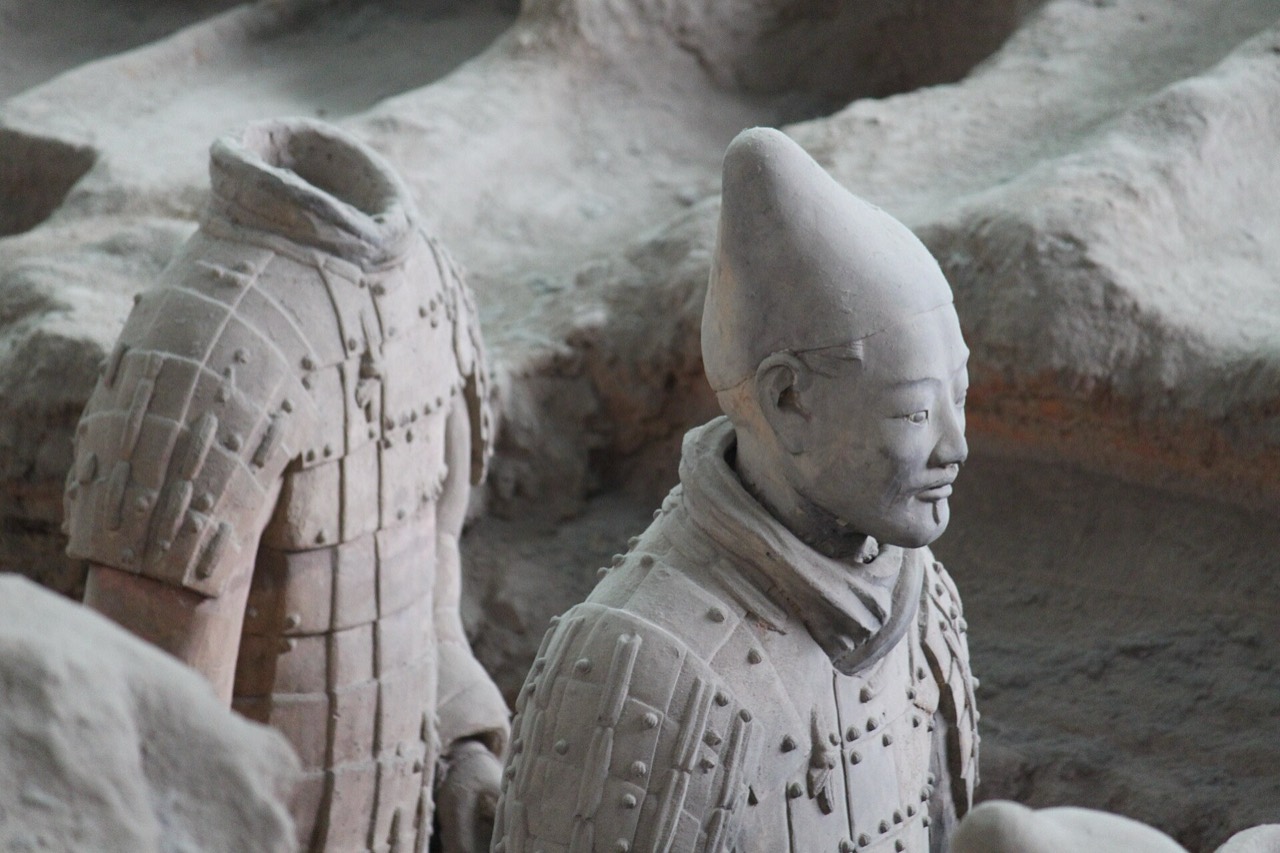
The Terracotta Army rewards preparation more than any sight in China. Tickets are real-name and advance-only (¥120 peak season, ¥100 winter; no counter sales) — book on the official WeChat account (“Emperor Qinshihuang’s Mausoleum Site Museum”) or Trip.com, and bring the passport you booked with: it is your ticket, scanned at the turnstile. Getting there independently is easy now: Metro Line 9 to Huaqing Pool, then the local shuttle (602) or a ten-minute Didi. If you use the classic Tourist Line 5 (306) bus from the railway station instead, know the famous scam: touts in official-looking uniforms telling you the real bus is “broken” — board only the green buses in the marked bays, and read our China scams guide on the plane. On site: walk Pit 1 to the far end where the restoration tables are, do Pit 3 before Pit 2, and get there for opening — the tour-group wave lands at ten.
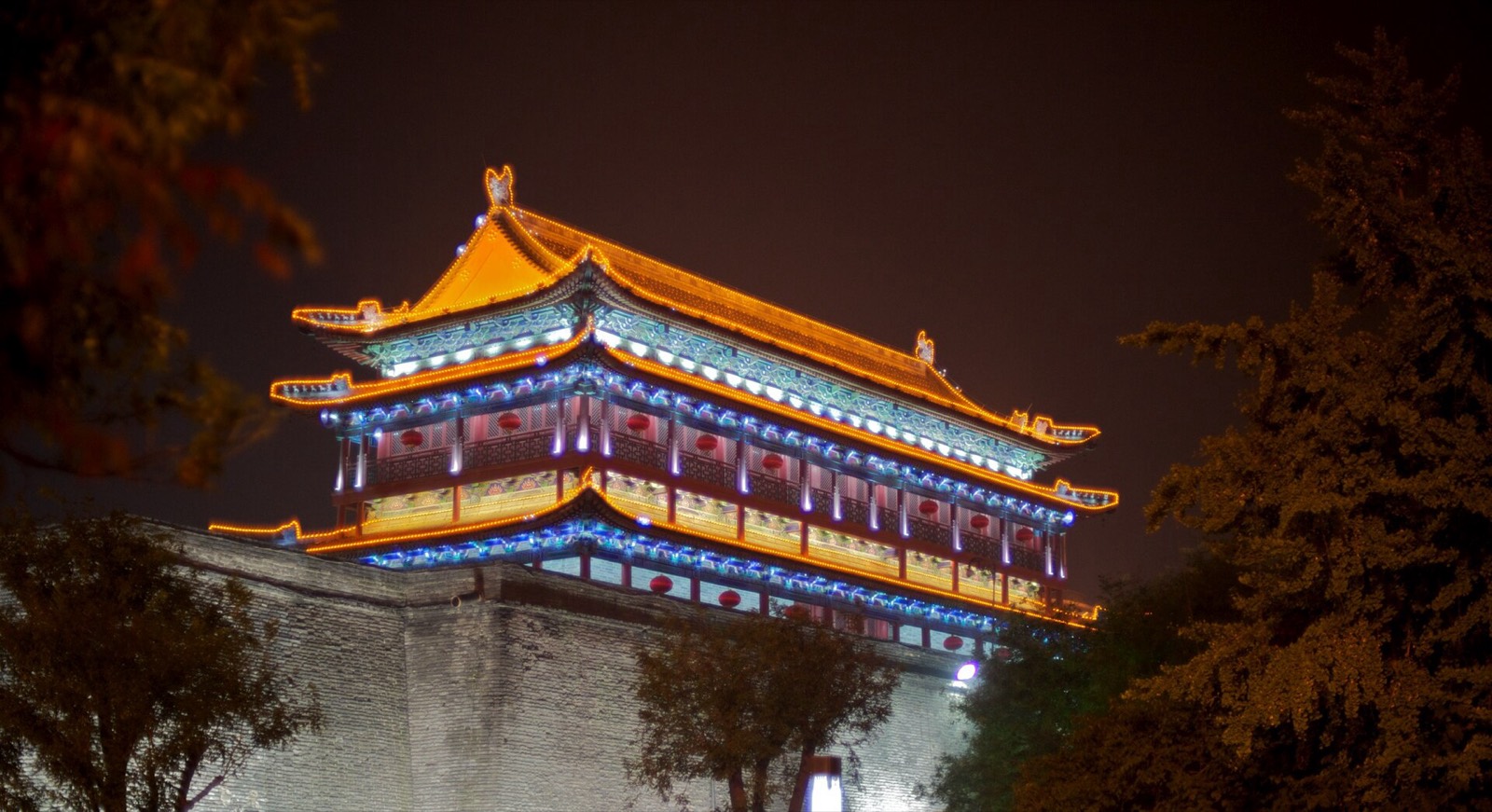
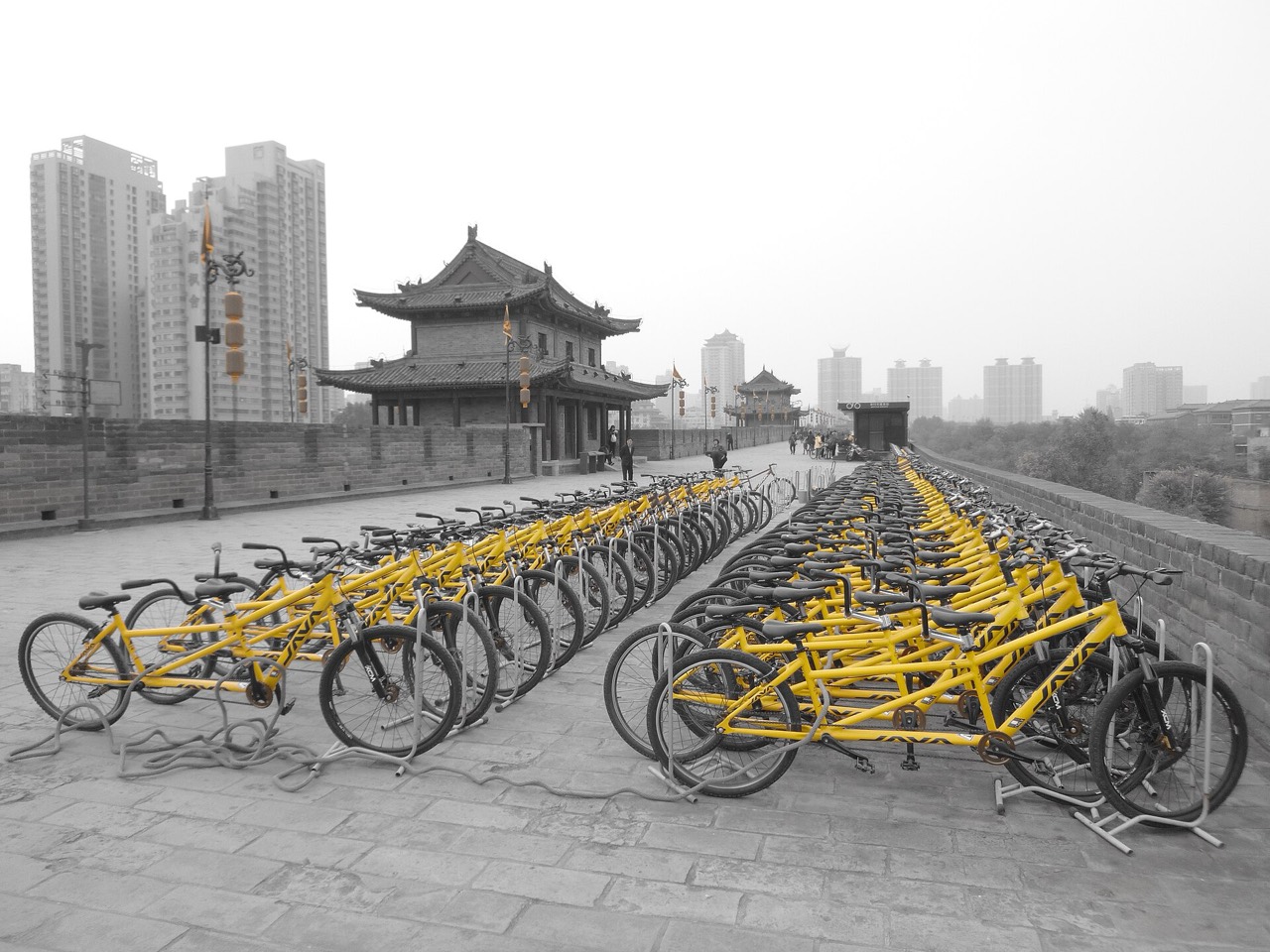
The city wall is Xi’an’s great mood-lifter: fourteen kilometres of Ming-dynasty battlements you can cycle in a leisurely 90 minutes (rental at the South Gate, roughly ¥45 for three hours, deposit required). Go two hours before sunset and roll from gold light into the lantern-lit evening; the north-east stretch is the quiet one.
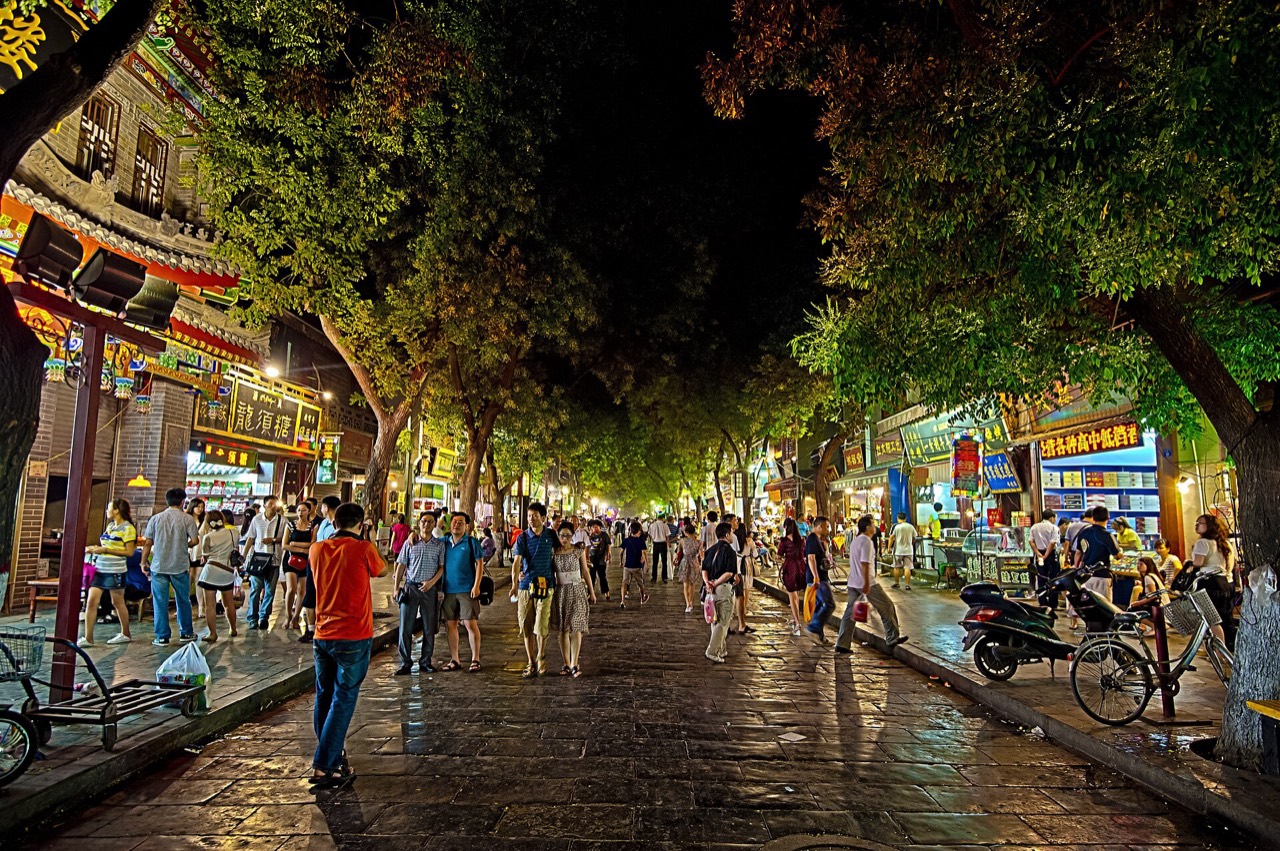
The Muslim Quarter (回民街) is the third essential — a thousand-year-old Hui neighbourhood behind the Drum Tower whose food streets are deservedly famous and deservedly mobbed. The move: eat down the main drag once for the theatre of it, then duck two lanes west to Sajinqiao, where the same dishes are cooked for locals at local prices. At its heart hides the Great Mosque, one of China’s oldest — a Ming courtyard complex where the minaret is a pagoda; it’s the calmest fifteen minutes in the city.
If you have a museum hour in you, the Shaanxi History Museum holds the Tang gold and the murals that make Chang’an’s cosmopolitan century tangible — but it runs the same real-name advance-booking system as the Warriors and sells out days ahead; book it the moment your dates firm up, or settle for the (excellent, unbooked) museum inside the Big Wild Goose Pagoda complex instead.
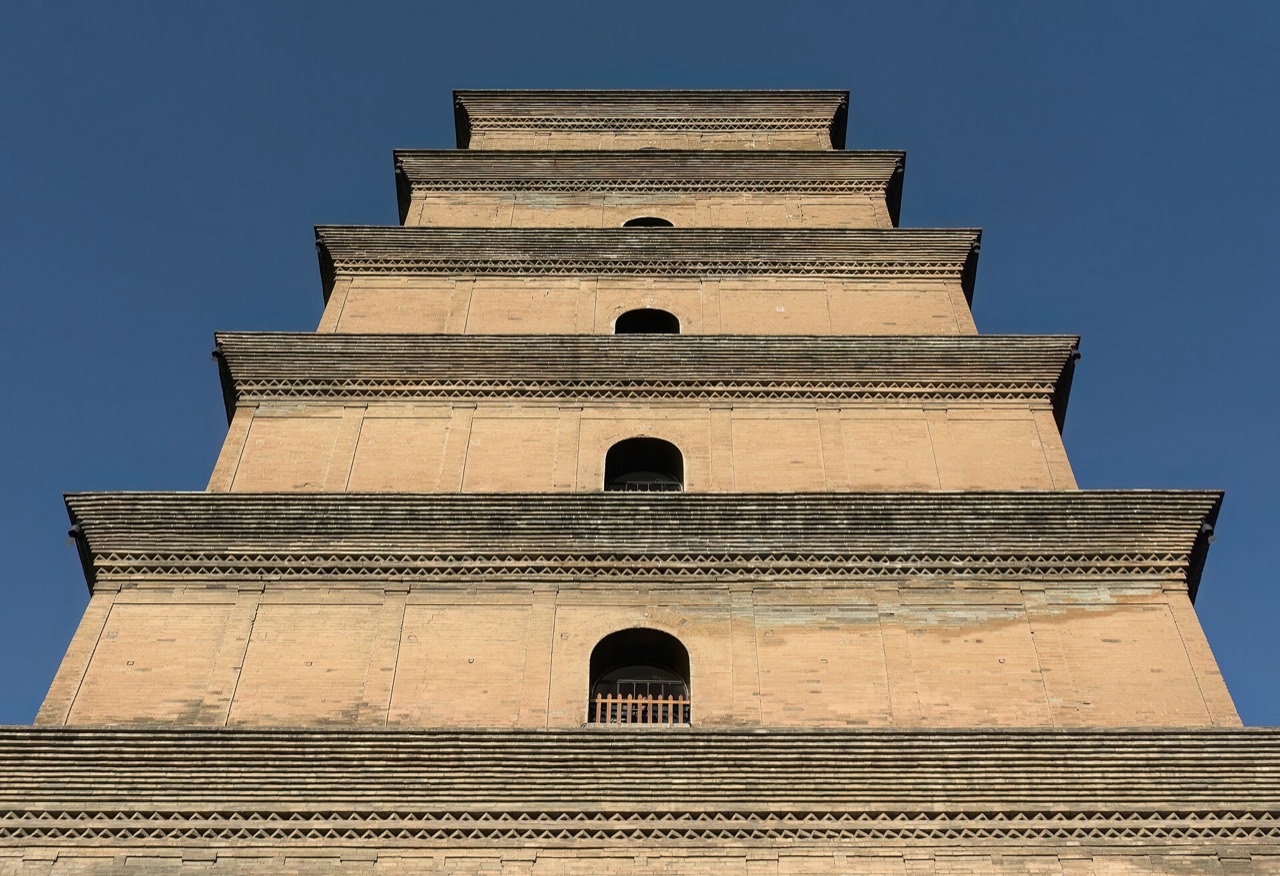
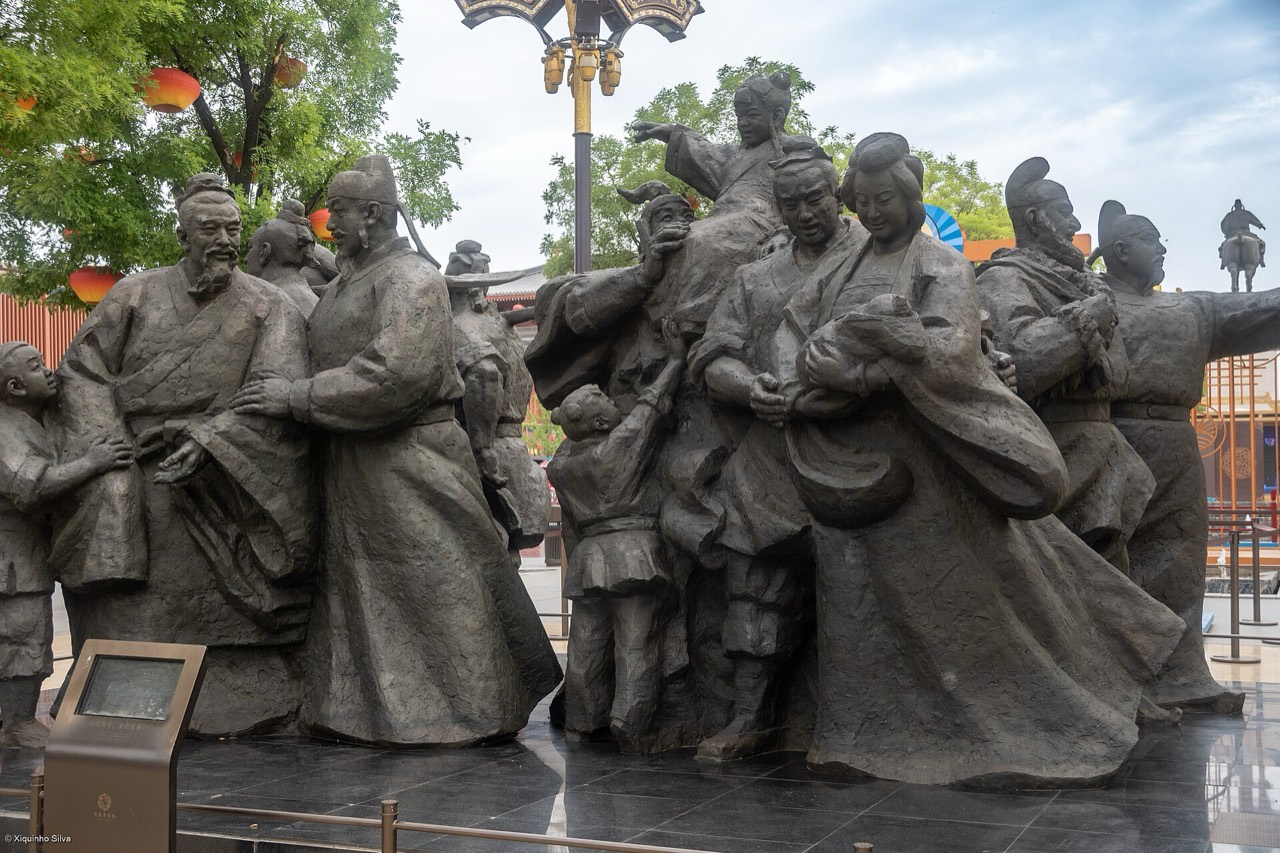
Round it out with the Big Wild Goose Pagoda (seventh-century, built for the monk whose journey became Journey to the West) and, after dark, the Datang Everbright City pedestrian mile beside it — a gloriously extra Tang-fantasy boulevard of lit pavilions, costumed performers and half of Xi’an out for a stroll in rented hanfu. Yes it’s kitsch. It’s also the best free show in town, and nobody will look twice at who you’re strolling with.
Eat like Chang’an wants you to eat
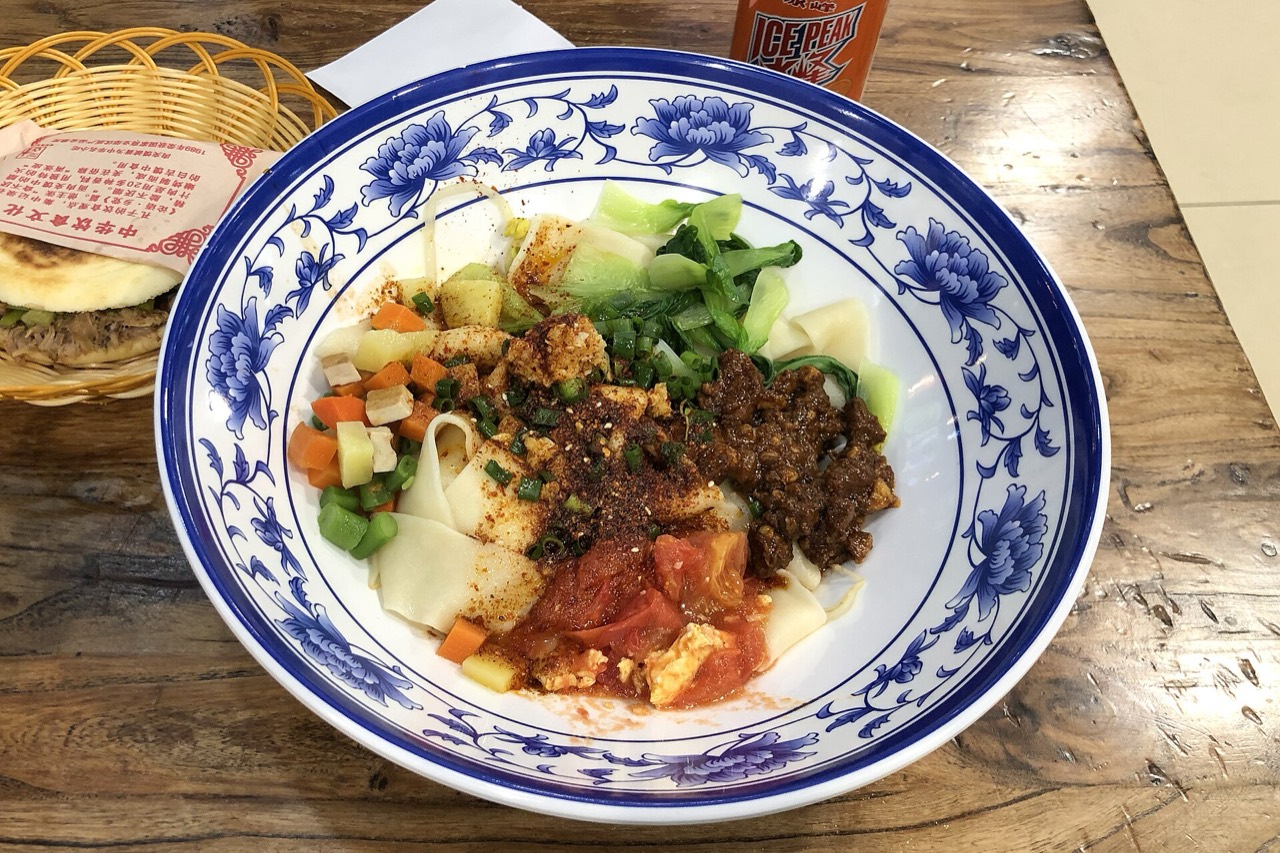
Xi’an eats like the crossroads it was: wheat, lamb, chilli and vinegar, at prices that make Chengdu look dear. The canon: biangbiang noodles (belt-wide, hand-slapped, buried in chilli and hot oil — the character for “biang” is so complex it can’t be typed, which tells you the city’s priorities); roujiamo, the stewed-pork “Chinese burger” that is the single best ¥12 in the country; yangrou paomo, the Hui lamb soup you ritually crumble your own flatbread into (the tearing is the point — smaller is better, take your time); cold liangpi noodles for the hot afternoons; and zenggao, the sticky date-and-glutinous-rice slab sold off tricycles in the Quarter at breakfast. Dumpling banquets at the century-old De Fa Chang by the Bell Tower are touristy and still worth one go. Deeper strategy and the vegetarian survival kit: the China food guide.
Day trips
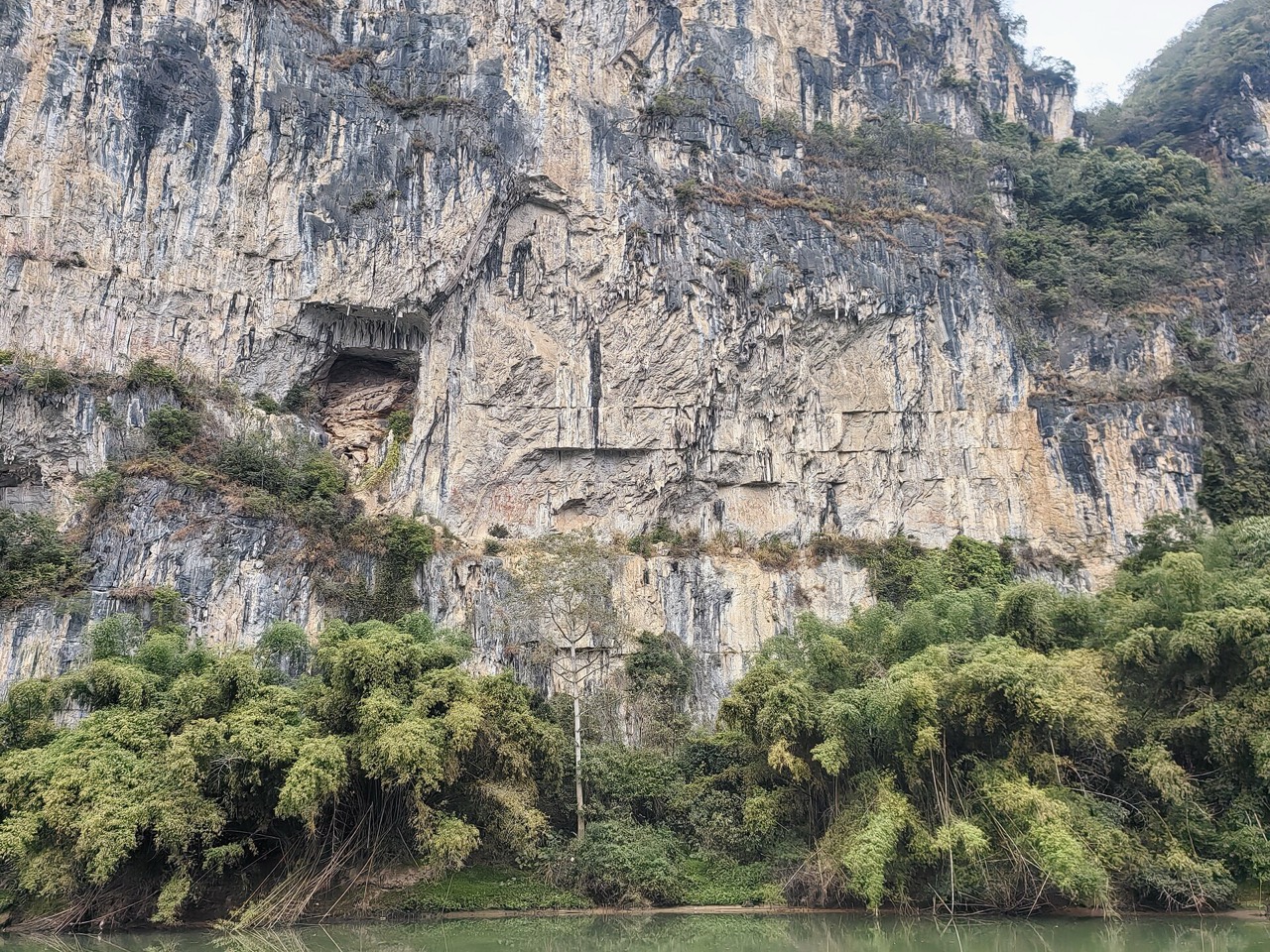
Hua Shan is the headline: the Taoist mountain of vertiginous granite ridgelines, 30–40 minutes from Xi’an North by high-speed rail (Huashan North station). Do the North Peak by cable car and the ridge walk to the East Peak for the drama-to-effort sweet spot; the famous plank-walk-in-the-sky is optional, queued, and genuinely not for the indecisive. Go on a weekday, start early, and treat “sunrise on the mountain” itineraries with suspicion unless you enjoy 3am stairs. Huaqing Pool pairs naturally with the Warriors (same metro line) if imperial bathing complexes and Tang love stories appeal. And when you’re done with dynasties: the bullet train to Chengdu runs 3–4 hours through the Qinling mountains, and on the other end is the best gay nightlife in China. That’s the route we’d build the whole trip around; more options in the day-trips guide.
TL;DR: the practical machinery
When: March–May and September–November, same as everywhere north; summer is hot and the Warriors’ halls are ovens, winter is cold but atmospheric on the wall. Avoid Golden Week here above all cities — Xi’an is a top domestic destination and the Quarter becomes a single organism. Detail: best time to visit China.
Getting in: Xi’an Xianyang (XIY) has a growing international map and the 240-hour visa-free transit applies here; Metro Line 14 runs airport to town. Most travellers arrive by rail — Xi’an North is one of Asia’s biggest HSR stations (Beijing ~4.5h, Chengdu 3–4h, Luoyang 1.5h). Check your passport against the visa guide; first-night survival: your first 24 hours.
Money, phone, transport: the standard mainland kit — Alipay/WeChat Pay set up before you fly, a travel eSIM for the firewall, metro + Didi for everything (the metro is excellent and English-signed; Line 2 spine, Line 9 for the Warriors). No tipping, anywhere, ever.
Safety: among the safest big cities you’ll ever visit; your real risks are chilli oil, the fake-306 touts and underestimating Hua Shan’s stairs. Emergency numbers and scripts live in the emergency guide (police 110, ambulance 120). Budget: Xi’an runs cheaper than any city in our flagship series — line items in what a gay China trip costs.
The bottom line
Xi’an gives the queer traveller something no scene city can: perspective. You come for an army built to guard an emperor forever, a wall you can cycle on top of, a bowl of noodles wider than your belt — and somewhere between the cabaret tables at In.D and the palace ruins where an emperor once cut off his sleeve rather than wake the man he loved, it lands that this country’s queer story is older than almost anything else you’ll photograph all trip. Two nights. Eat everything. Then catch the train south to Gaydu and dance it all off.


