
The weekend city: what Tianjin is actually for
Let’s be straight about what this guide is, because Tianjin rewards honest expectations: this is not a nightlife city, and it is certainly not a gay-nightlife city. What it is — and the reason it earns a flagship guide at all — is the best-looking easy weekend in northern China: a fourteen-million-person treaty port thirty minutes from Beijing by bullet train, stuffed with concession-era European streets, riverside promenades, the country’s funniest local culture and its best breakfast. Queer travellers use Tianjin the way locals use it in reverse — you come here for the daytime city and the slow evening by the Haihe, and when you want a proper gay night out, the capital’s scene is one cheap train away.
That train is the whole trick. The Beijing–Tianjin intercity line runs every few minutes for about ¥55 a seat, which makes these two cities function, for a visitor, like one city with two moods: Beijing for empire and Destination’s go-go shows, Tianjin for plane trees, jianbing and a Ferris wheel planted improbably in the middle of a bridge. This guide covers the Tianjin mood — checked against Chinese platforms and current listings as of July 2026 — and is honest about the part most guides fudge: the scene section below is short because the truth is short. The map and quick facts live on our Tianjin hub.
Being gay in Tianjin: the questions everyone asks
Is Tianjin gay-friendly?
In the everyday sense, yes — it’s a relaxed, unbothered northern port city where two men sharing a hotel bed raises nobody’s eyebrow and the general mood is warmer and slower than the capital’s. In the visible sense, no more than anywhere else on the mainland: there’s no gaybourhood, no flags, and the national norm we describe in the safety explainer — discretion outside, freedom inside — applies here with the added wrinkle that Tianjin has very little “inside” of its own. Safety is a non-issue; visibility is simply not the local currency.
Are there actually any gay bars?
Here’s the honest answer that saves you a wasted evening: we cannot verify a single dedicated gay venue operating in Tianjin in 2026. Not on the international directories, not on the Chinese platforms we check, not through the community media we follow. Names float around old forums, but nothing we’d send you across town for. Tianjin’s queer life runs on Blued grids, WeChat circles and private dinners — and on the 10:47pm problem having a very good solution: Beijing’s clubs are half an hour away. If you learn of somewhere real and current, tell us and we’ll verify it properly.
So is it Tianjin or Beijing for the night out?
Beijing, every time — and the logistics are genuinely painless. Intercity C-trains run from early morning until around 11pm in both directions, several an hour, ~35 minutes Tianjin ↔ Beijing South, about ¥55 in second class. Beijing South is on the capital’s Line 4 with the gay scene a straight metro run away. The classic move: Tianjin by day, an early dinner, the evening train in, Destination until late, and either the first train home or a cheap capsule night in Beijing. Check the day’s last return departure before you commit to a big one — after the trains stop, it’s a long expensive taxi.
Which part of town should I base myself in?
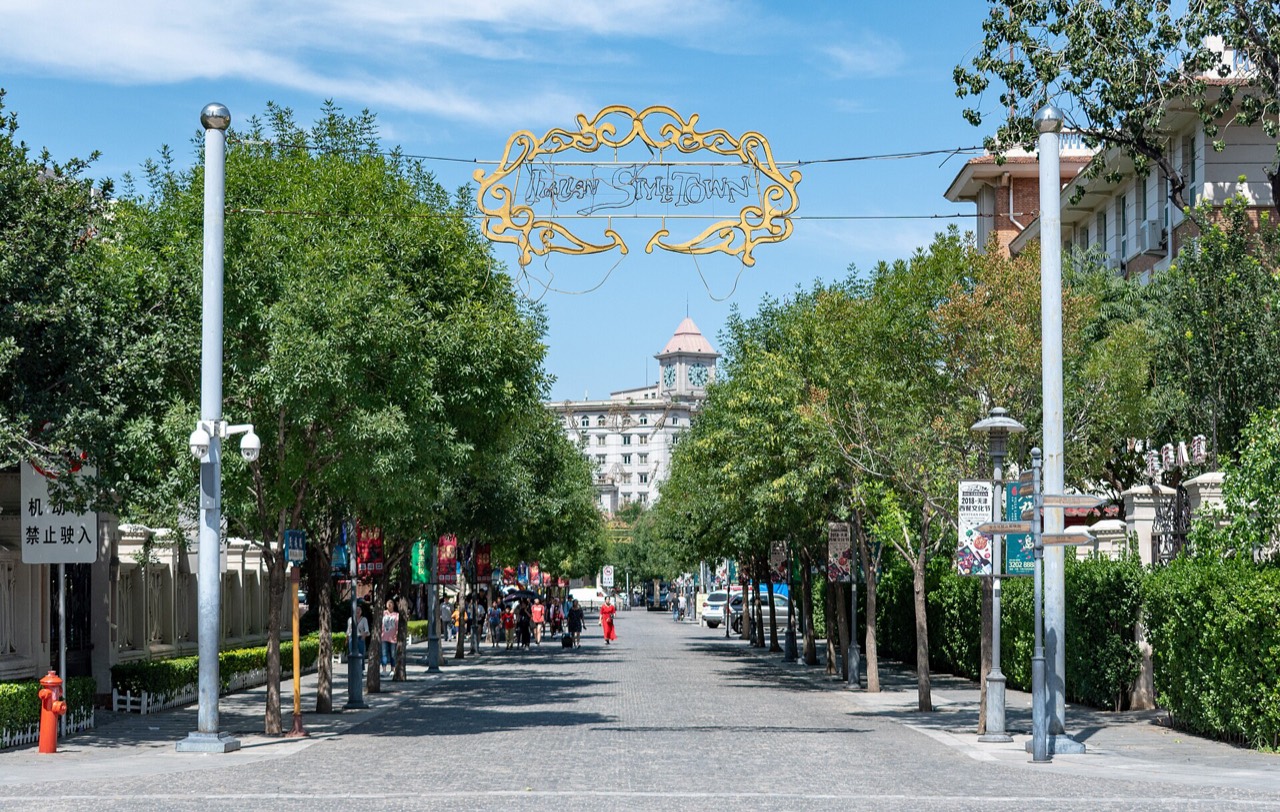
Heping District (和平区), no debate: it holds the Five Great Avenues, Binjiang Dao shopping, Xikai Cathedral and most of the hotels worth having, and it puts the riverside within a stroll. The romantic alternative is a hotel around the Italian Style Town / Haihe riverfront, which is prettiest after dark. Both are minutes from Tianjin railway station. Same-sex bookings are routine everywhere; our Tianjin hotels guide has the picks by budget.
What are the apps, and do they work?
Standard mainland kit, with extra weight on the apps because they are the scene here: Blued (international version: HeeSay) works without any workaround and the grids in Heping are livelier than the streets would suggest; Grindr and all Western apps are blocked without a travel eSIM to route around the firewall. The full rundown is in the apps guide, and the what’s-blocked list covers the rest of your phone. One local note: profiles here skew even more discreet than the national average — patience and a 你好 go further than a face-pic demand.
The scene, honestly — and the bathhouse footnote
Tianjin’s queer social life exists; it just doesn’t rent premises. What you’ll actually find: mixed, easy-going bars and cafés around Minyuan Stadium and the Five Great Avenues where nobody cares who you came with; riverside terraces in the Italian Style Town that do a very passable European-square evening; and an app-organised social layer that surfaces as hotpot dinners and KTV rooms rather than club nights. Treat any specifically “gay” listing you find online as historical until proven otherwise — that’s our standing verdict for this city, and it matches our hub’s long-held note.
One cultural footnote worth knowing: the north’s public-bathhouse (澡堂) tradition runs deep in Tianjin, and big mainstream bath-and-spa complexes are a genuinely great, cheap local experience — scrub-downs, saunas, sleep halls, the lot. They are mainstream family venues, not gay saunas, and should be enjoyed exactly as such: our bathhouse etiquette guide covers the rituals so your first 搓澡 scrub isn’t a surprise. There is no verifiable gay bathhouse in Tianjin; anyone promising otherwise online is selling you a ghost listing.
The evening playbook, Tianjin edition
A good Tianjin night is engineered differently from a club city’s, so here’s the working formula:
Golden hour on the water. Be on the Haihe promenade or a bridge by sunset — the river lights come up in stages and the whole city softens. This is also when the Tianjin Eye queue is worth standing in.
Terraces, then tea. The Italian Style Town does the aperitivo hour surprisingly well (mixed crowd, zero attitude, tourist prices); the longer, funnier alternative is booking a crosstalk teahouse show and letting two men in gowns out-banter each other for two hours. Between drag at Beijing’s Destination the night before and xiangsheng here, you’ll have covered both branches of Chinese men performing for a living.
Late = noodles or the train. Tianjin winds down early by big-city standards. After 11pm your honest options are late-night skewers and seafood around Heping’s side streets, a KTV room if your WeChat made friends, or having already caught the train to Beijing. Plan the night around which of those you want; the ones who end up disappointed are the ones who expected the city to improvise a scene at 1am. Etiquette for all of it — toasting, splitting bills, KTV survival — lives in the nightlife etiquette guide.
Getting home is trivial. Didi across the centre runs a handful of yuan, the metro runs to ~11pm, and Heping’s streets are safe at any hour you’ll realistically be out at.
Daytime Tianjin: the best-looking day out in the north
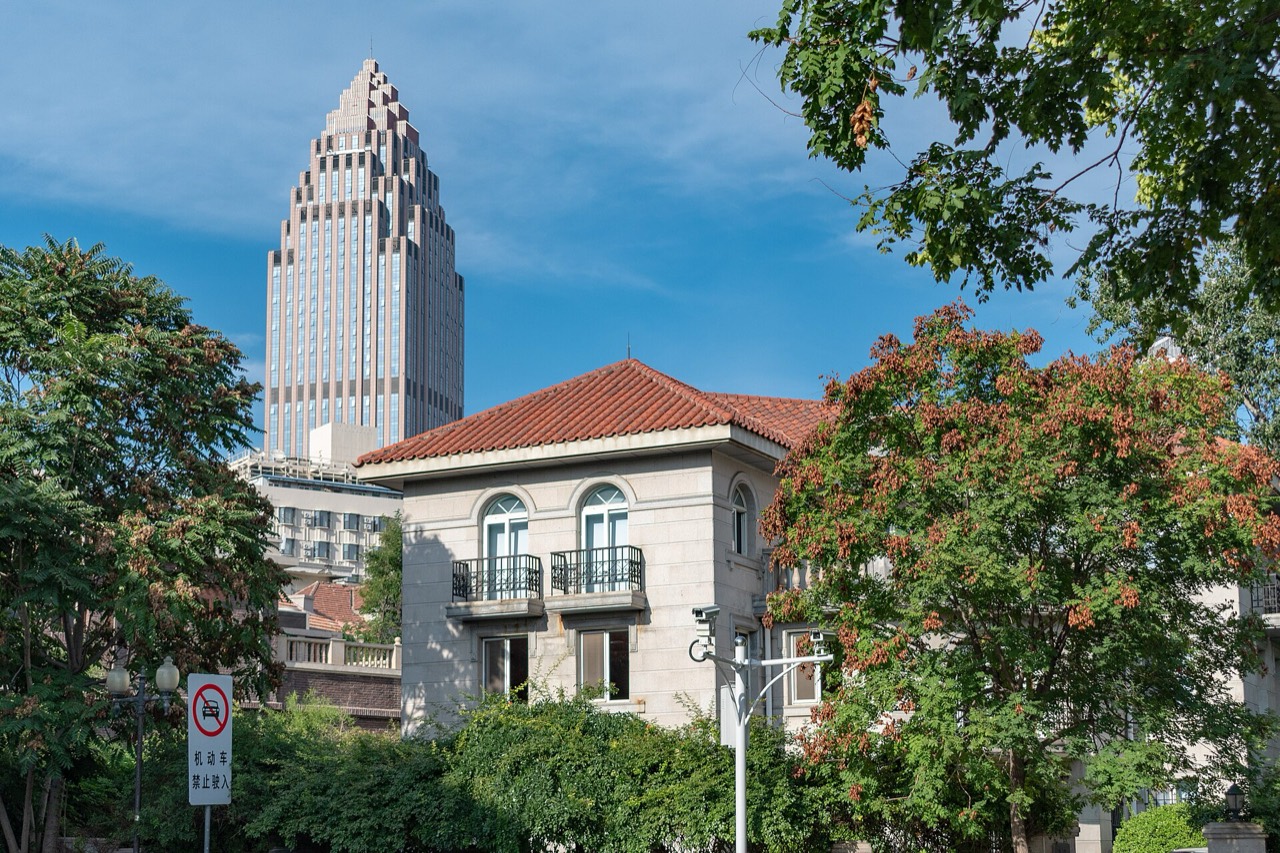
Cycle the Five Great Avenues (五大道). Two thousand-odd villas — British, French, Italian, Spanish, German — on five long leafy avenues, the largest intact concession-era quarter in China. Rent a shared bike or take the tourist horse-carriage from the Minyuan Stadium end, and give it a half day with coffee stops; the stadium itself, rebuilt as a sunken oval of cafés and running track, is where half of young Heping spends its Saturday.
Do the river properly. The Haihe is Tianjin’s living room. Walk the promenade from Century Clock at the station past the Astor Hotel (a working museum of a hotel — Puyi danced here), cross the Liberation Bridge, and end at the Tianjin Eye (天津之眼) — the 120-metre Ferris wheel built directly over the Yongle Bridge, one rotation in about thirty minutes with the whole city below. Verified for 2026: it runs roughly 9:30am–9:30pm, closes Monday mornings for maintenance, costs about ¥50–70, and same-day tickets genuinely sell out — book on the official WeChat account in the morning, and go at dusk. An evening Haihe river cruise from near the station is the budget alternative with much of the same skyline.
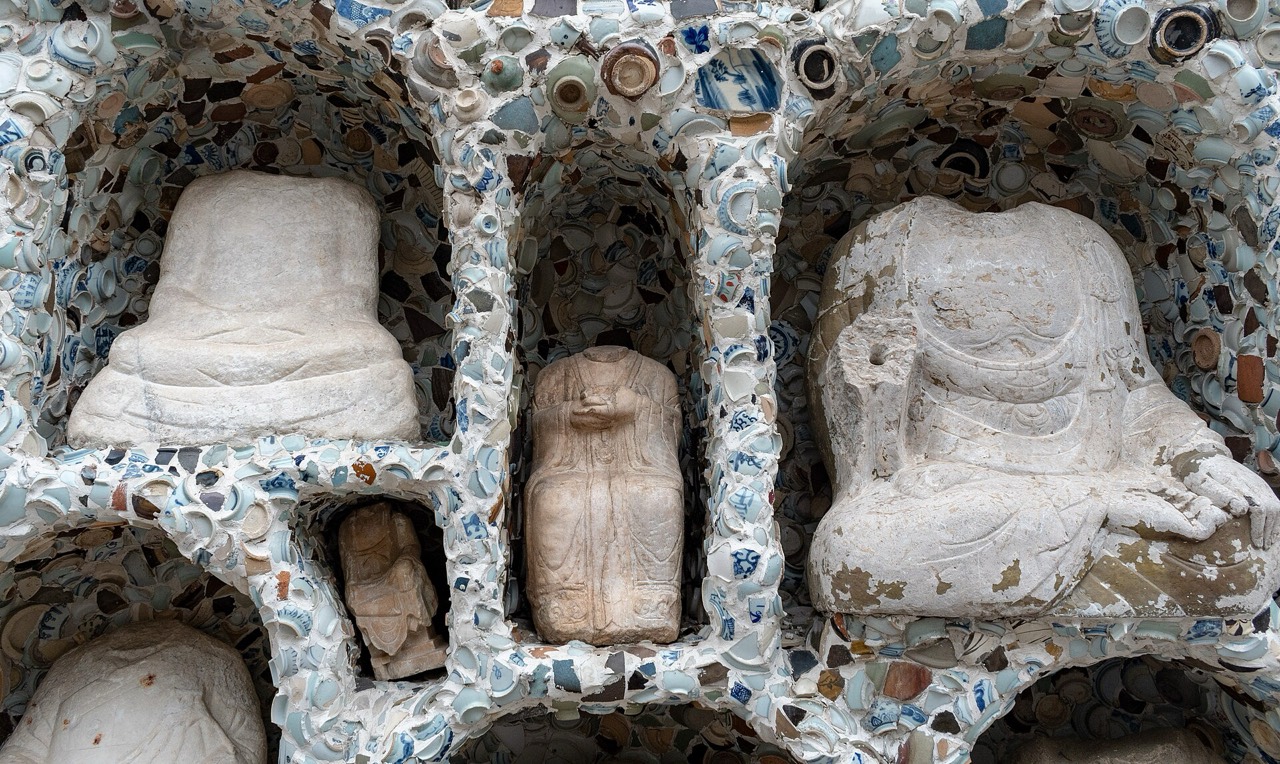
See the two oddballs. The Porcelain House (瓷房子) is a French villa armoured in hundreds of millions of pieces of antique porcelain by an obsessive collector — kitsch, contested, unmissable; expect a modest ticket and thirty entertaining minutes. And Xikai Cathedral, the north’s biggest Catholic church, anchors the Binjiang Dao shopping mile — the juxtaposition is very Tianjin.
Ancient Culture Street (古文化街) is the reconstructed Qing-style bazaar by the river — touristy, yes, but the clay-figurine (泥人张) and kite shops are the real inheritors of Tianjin craft traditions, and it’s the easiest place to watch the city perform itself.
The funny city: crosstalk and the Tianjin mouth
Every Chinese person will tell you the same thing about Tianjin: it’s the funny one. This is the spiritual home of xiangsheng (相声) — crosstalk, the rapid-fire two-man comic duelling that is China’s stand-up — and locals are reputed to conduct daily life at roughly the same wit-per-minute rate. The classic night out here isn’t a club at all: it’s a teahouse crosstalk show, melon seeds and endless tea included, at one of the old-school houses like the famous Mingliu Teahouse (名流茶馆) — book through Meituan/Dianping, expect to understand very little, and enjoy it anyway; comic timing crosses the language barrier better than you’d think. As a queer traveller you may find it quietly familiar: a century-old art form built on two men, a table, and immaculate banter.
Eat like Tianjin invented breakfast (it did)
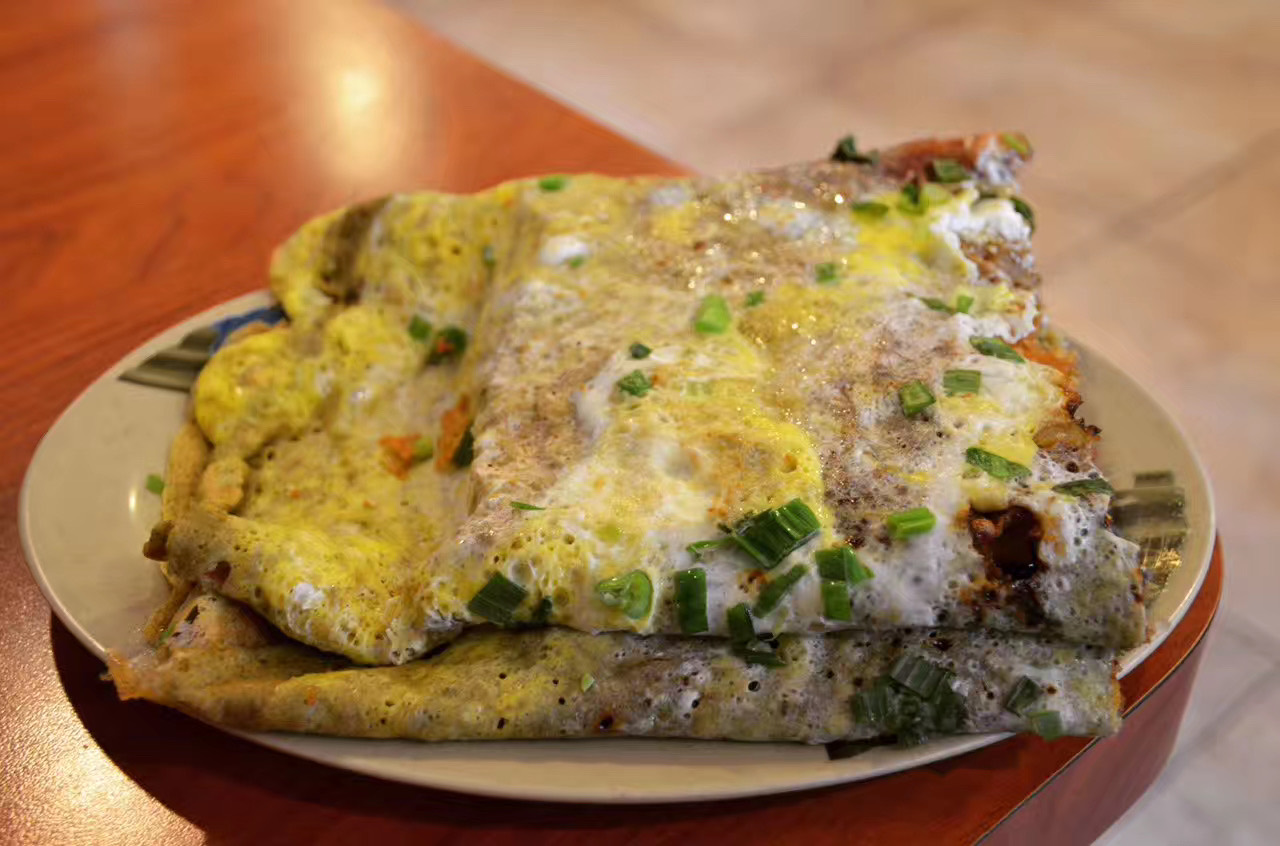
Jianbing guozi (煎饼馃子) is Tianjin’s gift to the world, and the city polices the original jealously: proper Tianjin jianbing uses mung-bean batter, an egg or two, a crisp cruller, sauce, and nothing else — suggest lettuce or sausage at a Tianjin window and watch a comedian be born. Eat one from any morning street window before 9am; it will be the best ¥8 of your trip. The other icons: Goubuli baozi (狗不理), the imperial-era steamed-bun house whose flagship locals now cheerfully mock as an overpriced tour-bus stop — have baozi, just have them at any busy neighbourhood shop instead; erduoyan fried glutinous cakes (耳朵眼炸糕); and shibajie mahua (十八街麻花), the giant fried dough twists that make the correct edible souvenir. Being a port, the seafood is quietly excellent too. Wider strategy and dish characters: the China food guide.
Beyond the centre: the eye, the Wall, and the flip-trip
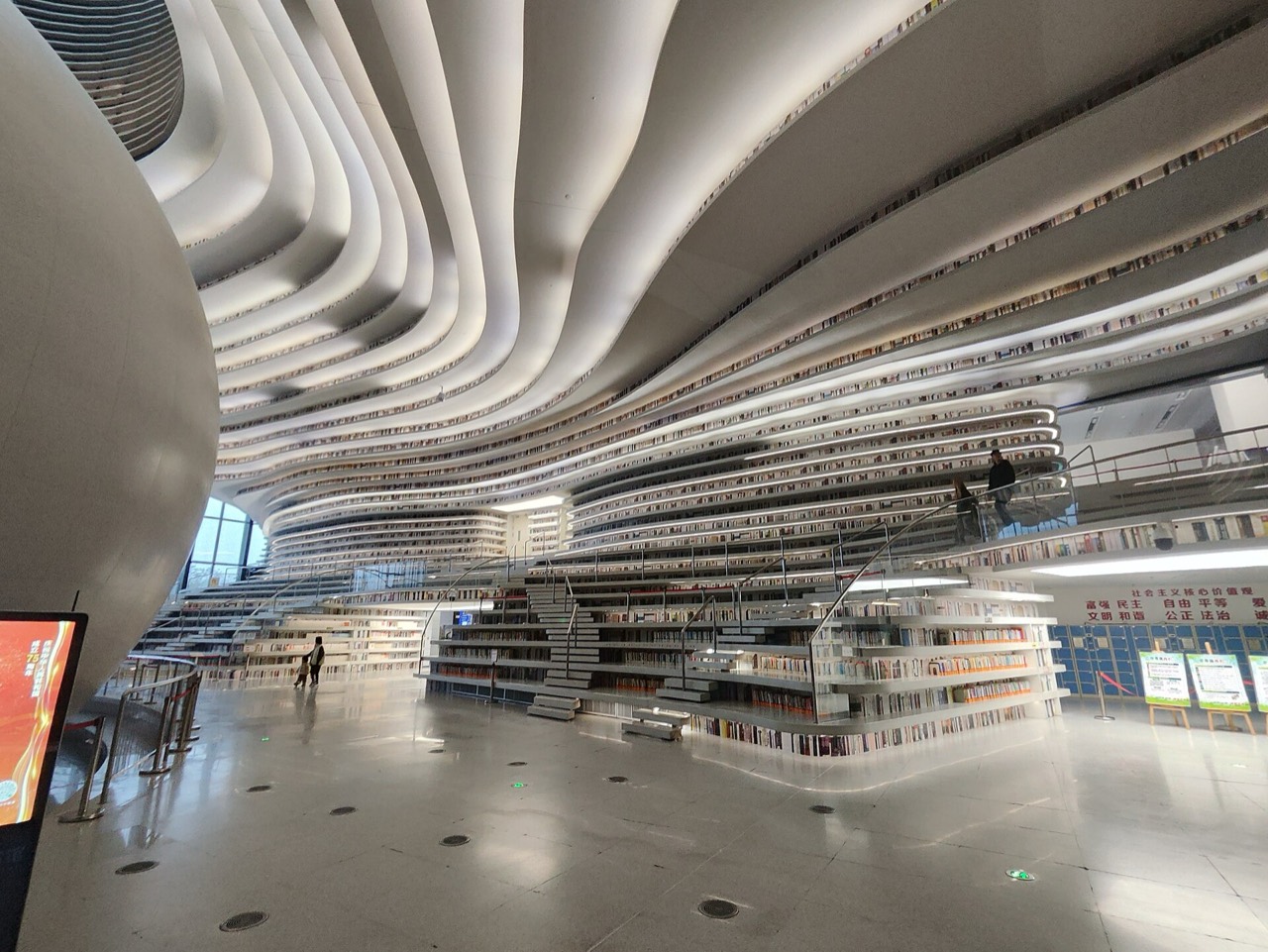
Binhai Library (滨海图书馆) is the one that broke the internet: a luminous white atrium of rippling shelf-terraces wrapped around a mirrored sphere — locals call it the Binhai Eye. Verified for 2026: entry is free (bring your passport; booking via its WeChat mini-programme is the safe play), hours roughly 9:30am–8pm and Monday from 2pm — and the honest footnote: most of those swooping atrium “books” are printed spine-images, with the real collection in conventional rooms behind. Go for the architecture, not the reading. It’s deep in the Binhai New Area — allow a half-day round trip by metro/commuter rail or Didi.
Huangyaguan Great Wall (黄崖关) is Tianjin’s own stretch of Wall, in the hills of Jizhou two-and-a-half-plus hours north — steep, handsome, and a fraction of Badaling’s crowds. Easiest as a day tour or hired Didi; pair it with the old town of Jizhou if you make the trek.
And the honest headline day trip is, of course, Beijing itself — the flip of this whole guide. Run our Beijing flagship in reverse: Forbidden City at opening, duck for dinner, Destination until the small hours, first train back with a jianbing waiting. More escapes: the day-trips guide.
TL;DR: the practical machinery
Getting in and around
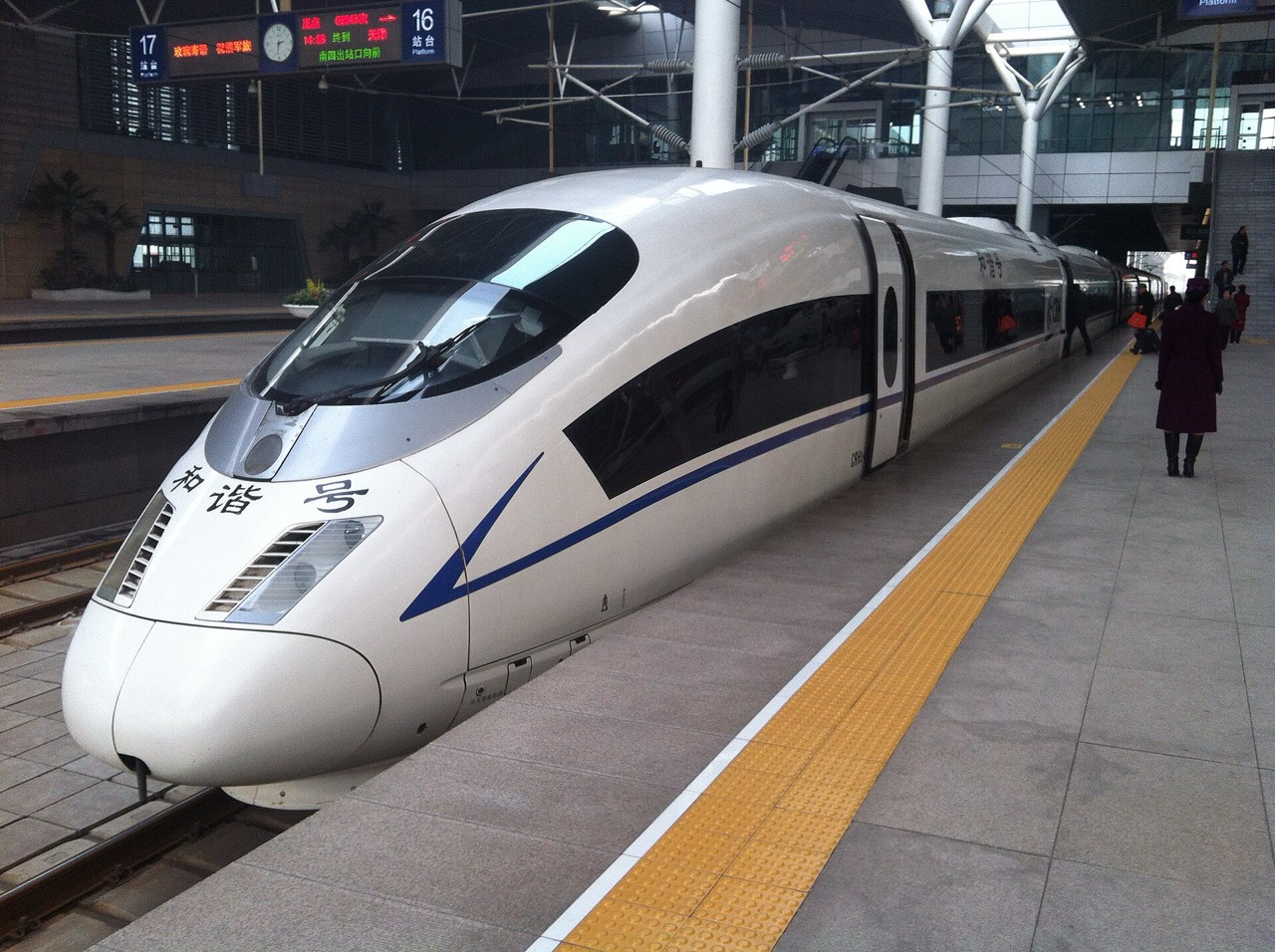
From Beijing: intercity C-trains from Beijing South every few minutes, ~30–35 minutes, about ¥55 second class into Tianjin station (riverside, central — the one you want) or Tianjin West; book in the national Railway 12306 app or Trip.com. Flying, TSN (Binhai) is a modest hub on Metro Line 2, though most international routes still favour Beijing’s airports plus the train. In town: the Metro is cheap and English-signed, Didi is everywhere, and the centre walks well — set-up guide: metro & Didi for foreigners. Slot Tianjin into a longer route with the high-speed-rail circuit.
Money, phone, timing
The standard mainland kit applies: Alipay/WeChat Pay set up before you fly (payment guide), a travel eSIM for the firewall, passport for check-ins, tipping nowhere. Many Western passports currently enter China visa-free or on 240-hour transit — check yours against the visa guide. Best months mirror Beijing’s: April–May and September–October; winters are cold and bright, summers sticky; avoid Lunar New Year closures. First-night mechanics: your first 24 hours; budgets: what a gay China trip costs.
The bottom line
Some cities earn their place in a queer travel guide with their nightlife; Tianjin earns it with everything else, plus a train. Come for the villa streets and the river, the porcelain folly and the funniest teahouses in China, the breakfast that ruins all other breakfasts — and when the evening wants more than a riverside beer, let the intercity line do what it was built for. As a stand-alone destination it’s a lovely, low-pressure day and a half; as Beijing’s seaside-flavoured other half, it makes the capital trip better. That’s not a consolation prize. That’s just knowing what a city is for.


