
Singapore: the easy bookend
Every long China trip deserves a soft landing or a gentle exit, and no city on earth does that job better than Singapore. Three storeys of butter-smooth immigration at Changi, English on every sign, Grindr loading without a VPN, a flat white that tastes exactly like home — after two weeks of glorious, chaotic, firewalled China, stepping into Singapore feels like putting on noise-cancelling headphones. And unlike the sterile stopover of its reputation, the city-state quietly holds one of Southeast Asia’s most consolidated gay scenes: a genuine gaybourhood of heritage shophouses, saunas that operate openly and legally, and a Pride gathering that draws tens of thousands to a downtown park every June.
It’s also a scene at a turning point. Parliament repealed Section 377A — the colonial-era ban on sex between men — in November 2022, closing a 15-year fight, and the energy since has been visible: the Neil Road bars are busy, the drag calendar is full, and Pink Dot keeps growing. This guide covers the whole picture the way our China flagships do — the strip, the saunas, the honest legal fine print — plus the practical case for making Singapore the first or last stamp of a China route. Short version with the venue map: our Singapore hub.
Being gay in Singapore: the questions everyone asks
Is Singapore actually gay-friendly?
More than its buttoned-up reputation suggests, and more every year. The scene is small but visible and completely legal: bars fly rainbow flags on a heritage street, saunas advertise openly with websites and price lists, and Pink Dot fills Hong Lim Park each June. Day to day, a same-sex couple will find Singapore entirely unremarkable to move through — hotels don’t blink, restaurants don’t stare, and personal safety is about the best on the planet. What Singapore is not is loud about any of it: mainstream media stays conservative by regulation, and the political settlement (more below) deliberately parked the bigger questions. Think “quietly comfortable” rather than “celebratory” — a full notch more relaxed than mainland China, a notch more reserved than Bangkok or Taipei.
What’s the legal position now, precisely?
Worth stating exactly, because both halves matter. On 29 November 2022 Parliament repealed Section 377A, decriminalising sex between men (in force since 3 January 2023). The same sitting passed a constitutional amendment — the new Article 156 — which shields the existing legal definition of marriage (one man, one woman) from court challenge: only Parliament, not judges, can change it. So being gay is fully legal; marriage and civil partnership are off the table for now; and media codes still restrict LGBTQ+ content on mainstream broadcast. For a visitor, the practical translation is simple: nothing you’ll do on a normal trip — the bars, the saunas, the hand-holding at dinner — sits anywhere near a legal line.
Where is the gaybourhood?
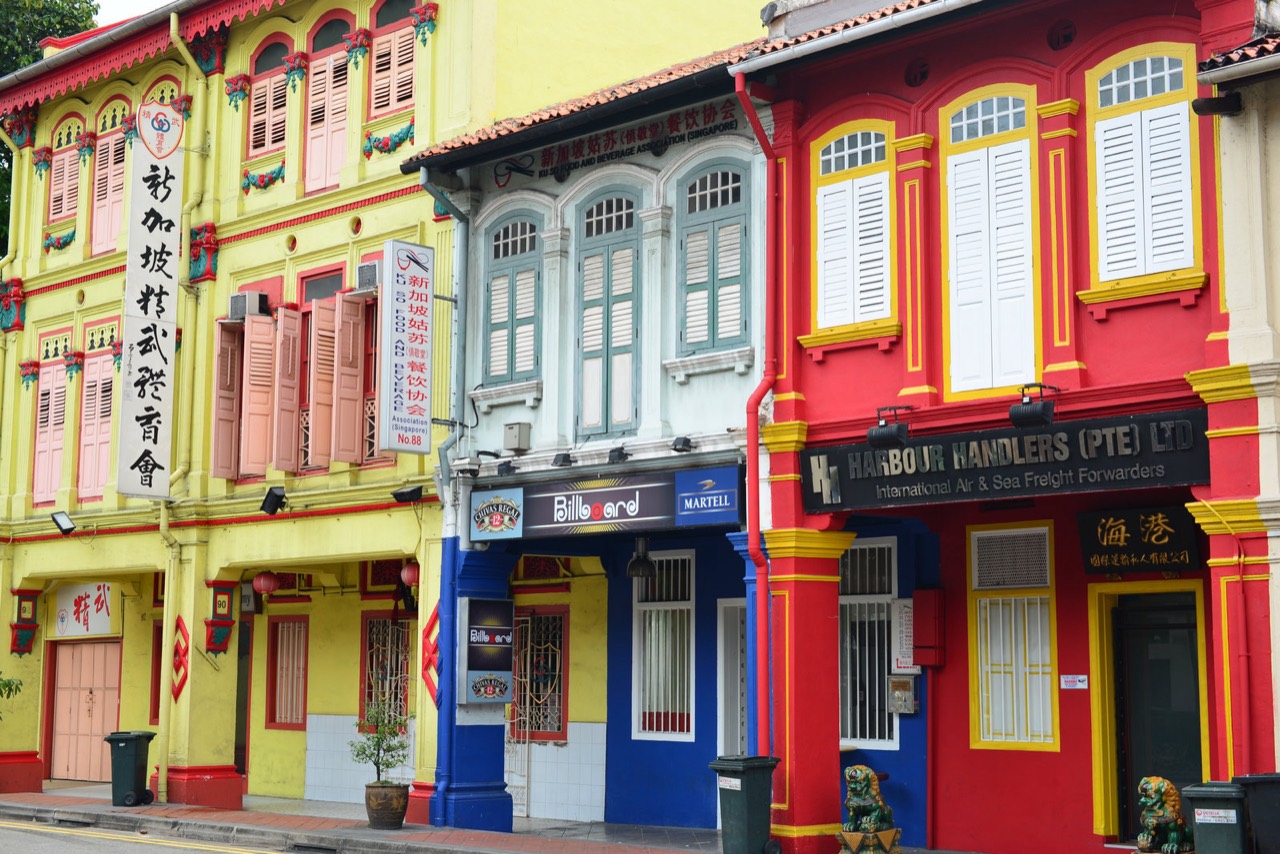
One compact, genuinely charming answer: the Neil Road / Tanjong Pagar corridor on the southern edge of Chinatown — a strip of pastel Peranakan shophouses holding most of the city’s gay venues within a five-minute stroll, with the standing landmarks at 78 Neil Road (Tantric and May Wong’s) and 74 Neil Road (Backstage), and the dance floor around the corner on Duxton Road (Taboo). Outram Park and Maxwell MRT stations both drop you at the door, the biggest sauna is one street over on New Bridge Road, and some of the city’s best food is a hawker centre away. As gay districts go it may be the most walkable in Asia.
Do the apps work? What’s the internet situation?
Everything works — that’s half the point of putting Singapore at either end of a China route. Grindr, Scruff, Tinder, Instagram, Google Maps: all normal, no VPN, no blocked-apps chess. Grids are dense and English-speaking, and the crowd is a genuine mix — locals, expats, and half of Southeast Asia passing through. If you’re arriving from the mainland, expect your phone to feel almost confusingly frictionless for the first day.
Can visitors join Pink Dot?
Here’s the honest answer most guides skip: not inside the park. Pink Dot happens at Hong Lim Park — Singapore’s Speakers’ Corner — and the law restricts assemblies there to citizens and permanent residents only, with no participant/observer distinction and real penalties for organisers who let foreigners in; expect barricades and ID checks, not a technicality anyone winks at. What visitors can do: watch the light-up from outside the park’s edge, follow the livestream (the 2026 edition — Pink Dot 18, held 27 June — streamed its evening programme), and join the fringe events in private venues around Pride month, which are open to everyone: drag shows, parties, panel nights across the city’s bars. Time a trip for late June and you’ll feel the season regardless of the rule.
How does Singapore pair with a China trip?
Perfectly, and in either direction. Changi flies non-stop to every city in our flagship series — Shanghai, Beijing, Guangzhou (under four hours), Chengdu, Chongqing, Hong Kong, Taipei — and most Western passports enter Singapore visa-free for 90 days with nothing to arrange. Use it as the soft landing (adjust to the timezone, eat well, sort your China apps and eSIM over a long weekend, then fly in) or the decompression chamber (land from the mainland, exhale, spend three days on beaches and open internet before the long-haul home). Route-planning help: our two-week China itinerary and best gay cities in Asia ranking.
Where the scene lives
Singapore’s queer geography is refreshingly simple. Neil Road is the heart — two shophouses, four venues, one strip of pavement that turns into a de facto street party by midnight on Saturdays. Around the corner, Duxton Road holds the dance floor. One street north, New Bridge Road (Outram) holds the flagship sauna, with a second by Clarke Quay ten minutes away. That’s the whole map — everything else is pop-up parties announced on Instagram and the apps, plus the queer-adjacent wine bars of Duxton Hill and Keong Saik Road, which have gentrified into some of the prettiest drinking streets in Asia. Every venue below is pinned on the Singapore hub map.
The bars: one strip, three institutions
Tantric & May Wong’s Café (78 Neil Road) is the anchor and the origin story: when it opened in May 2004 it became the first bar on Neil Road to fly a rainbow flag over a heritage shophouse doorway, and two decades later it’s still arguably the most popular gay bar in the city. The formula hasn’t aged: strong double-pour cocktails (the Blue Spin is the house legend), a leafy open-air courtyard that catches the evening breeze, and a crowd that runs local-professional early and regional-party late. The attached May Wong’s Café feeds the strip Asian-fusion comfort food, and the current deals are very Singapore-pragmatic: a Friday/Saturday “liquid buffet” (8–11pm, from S$38) and 1-for-1 shots in the 2–3am home strait, every night. Start here; everyone does.
Backstage (74 Neil Road) is the sister institution two doors down and the local counterweight — a two-level shophouse bar with a breezy upstairs balcony over the street, honest cheap pours (house doubles around S$12, with no GST or service charge sneaking onto the bill) and a karaoke-forward, more Singaporean crowd than the expat-heavy courtyard next door. It’s where the strip’s regulars actually are on a Tuesday.
Taboo (57 Duxton Road) has been the strip’s dance floor since 1997 — a compact, sweaty, pop-diva room that fills late and peaks somewhere between the second Kylie remix and the 3am lights. Wednesday to Saturday, free-ish early and busiest after midnight on weekends; The Loft upstairs is its sofa-strewn decompression deck when your feet give out. It’s not Berlin and doesn’t want to be — it’s the reliable, joyful little club a five-venue scene deserves.
Two calibration notes. First, prices: after China’s ¥40 cocktails, Singapore stings — S$15–20 a drink is normal, which is exactly why the strip’s happy hours and buffet deals matter. Second, closing times: 2am is standard, 4am is the weekend ceiling. This is an early city by mainland standards — front-load your night.
The night-out playbook
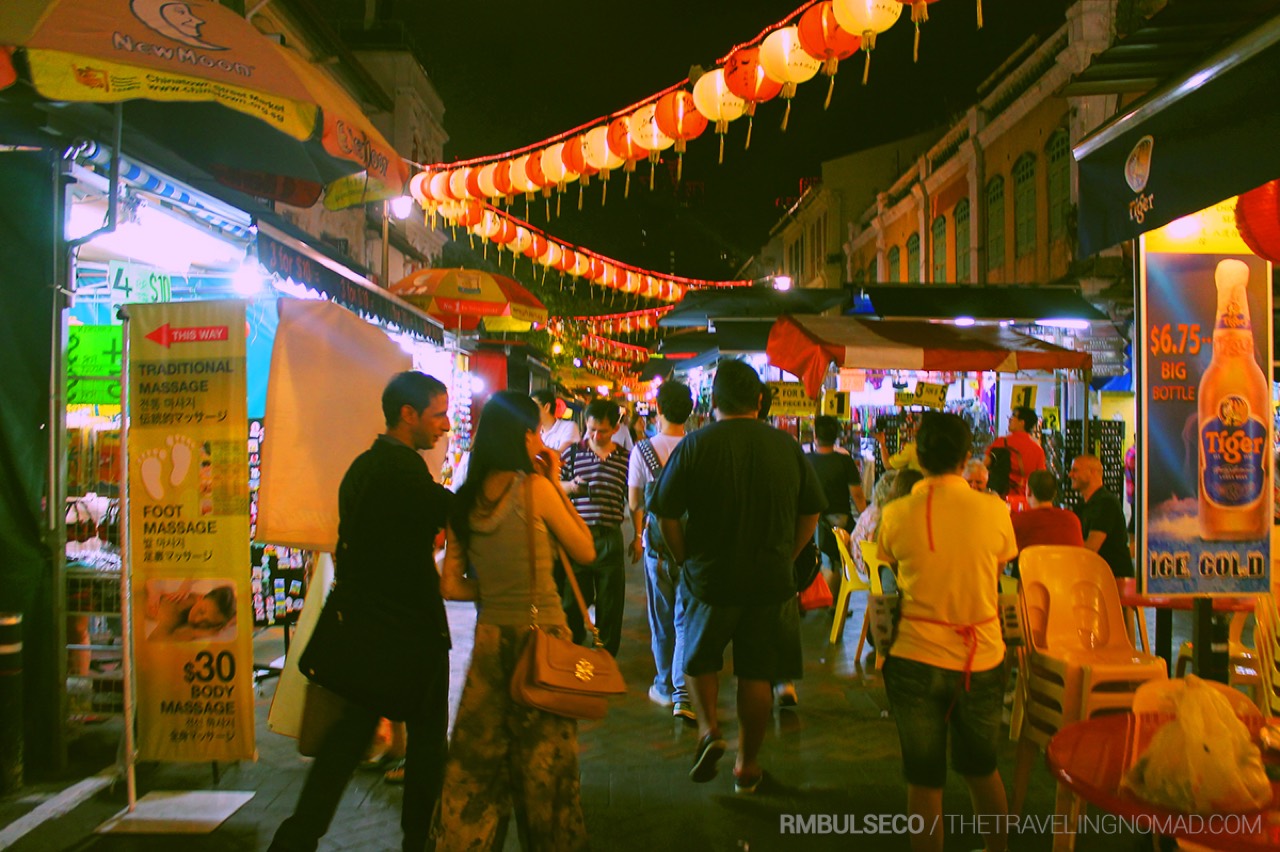
Mechanics that make a Singapore night smoother, especially arriving off a mainland leg:
Front-load the evening. The strip warms up at 8, peaks 11–1, and closes 2–4am even on the big nights. If your body clock is still on Chengdu time — where nothing starts before 11 — you’ll miss the whole party. Dinner early, bars by 9.
Work the deals, not the menu. Full-price drinks (S$15–20) are how the city punishes the unprepared. Tantric’s weekend liquid buffet, Backstage’s no-GST doubles and every bar’s happy hour exist precisely because locals won’t pay list price either.
Time the last train. The MRT stops around midnight; after that it’s Grab, which is reliable and metered-honest but surges on Saturday nights. From Neil Road, most central hotels are a S$10–15 ride — or a genuinely pleasant 20-minute walk through Chinatown.
Dress code: none, mostly. Shorts-and-sandals is fine on the strip (this is the equator); the only doors that care are Marina Bay rooftop bars. Deodorant is the real dress code — respect the humidity.
Read the room on discretion. Couples hold hands in Tanjong Pagar and nobody looks twice; on the MRT at noon it’s rarer but hardly radical. Singapore’s norm sits pleasantly between the mainland’s full discretion and Sydney’s full visibility — calibrate to the street you’re on and you’ll never feel friction.
Drag & the events calendar
The name to know is RIOT! — Becca D’Bus’s drag revue, running for over a decade and now the city’s standing queer variety institution, with big-room shows (2026 editions have played the Hard Rock Café, including a Pride-weekend special) and the gloriously silly BALLS drag-bingo nights between them. Tickets sell properly in advance — check riotdragshow.com when you book flights, not when you land. Beyond RIOT!, the calendar is app-and-Instagram driven: pop-up parties spike around Pink Dot weekend in late June and again around New Year, and the Neil Road bars post their themed nights weekly. There is no government-gazetted Pride parade and won’t be soon — Pink Dot is the calendar’s centre of gravity, with the visitor rules covered honestly above.
Saunas: legal, listed and actually open
This is where Singapore quietly outperforms every mainland Chinese city in this series: the saunas here operate openly and legally, with websites, posted price lists and regular hours — no Blued-verification ritual required. The flagship is Ten Mens Club (323 New Bridge Road, steps from Outram Park MRT and one street from the Neil Road bars), running since 2007 across five floors and 6,000-plus square feet: therapeutic hot pools, steam rooms, a maze, private cabins, a networking café and themed weekly nights, with card and PayNow accepted at the door like any other business — because here, it is one. Keybox (17 Upper Circular Road, by Clarke Quay MRT) is the modern second option, open daily from noon straight through to 8am with walk-in entry around S$22; Shogun in Chinatown rounds out the circuit as the 24-hour old-schooler — check its current hours on the day. First bathhouse anywhere? Our etiquette guide covers the universal rituals; the regional picture is in the saunas guide.
A legacy worth knowing: Bugis Street
Before Neil Road, there was Bugis Street — and for three decades after the Second World War it was the most famous queer night quarter in Asia. From the 1950s to the early 1980s its open-air tables were the after-midnight stage of Singapore’s trans women and drag performers, drawing sailors, tourists and film crews from around the world; for a generation of Western visitors, “Bugis Street” was Singapore after dark. Urban redevelopment razed it in the mid-1980s and the sanitised shopping strip that carries the name today keeps no visible trace — but the history matters, both as a reminder that queer Singapore long predates its legal recognition, and as the reason older locals smile knowingly when the neighbourhood comes up. Walk it once, buy something air-conditioned, and raise a silent glass to the queens who made the street legendary.
Where to stay
Same-sex bookings are a complete non-event in Singapore — book anything. The strategic choice is location: a boutique shophouse hotel in Tanjong Pagar / Chinatown puts the entire gay strip, the flagship sauna and two MRT lines within a ten-minute walk, and the neighbourhood’s conversions (around Duxton Hill and Keong Saik Road) are some of the prettiest mid-range rooms in Asia. The Marina Bay towers are the splurge with the skyline; Orchard Road is comfortable but puts a taxi between you and every venue in this guide. One China-contrast note worth savouring: no passport photographing, no registration forms — check-in takes ninety seconds.
Daytime Singapore
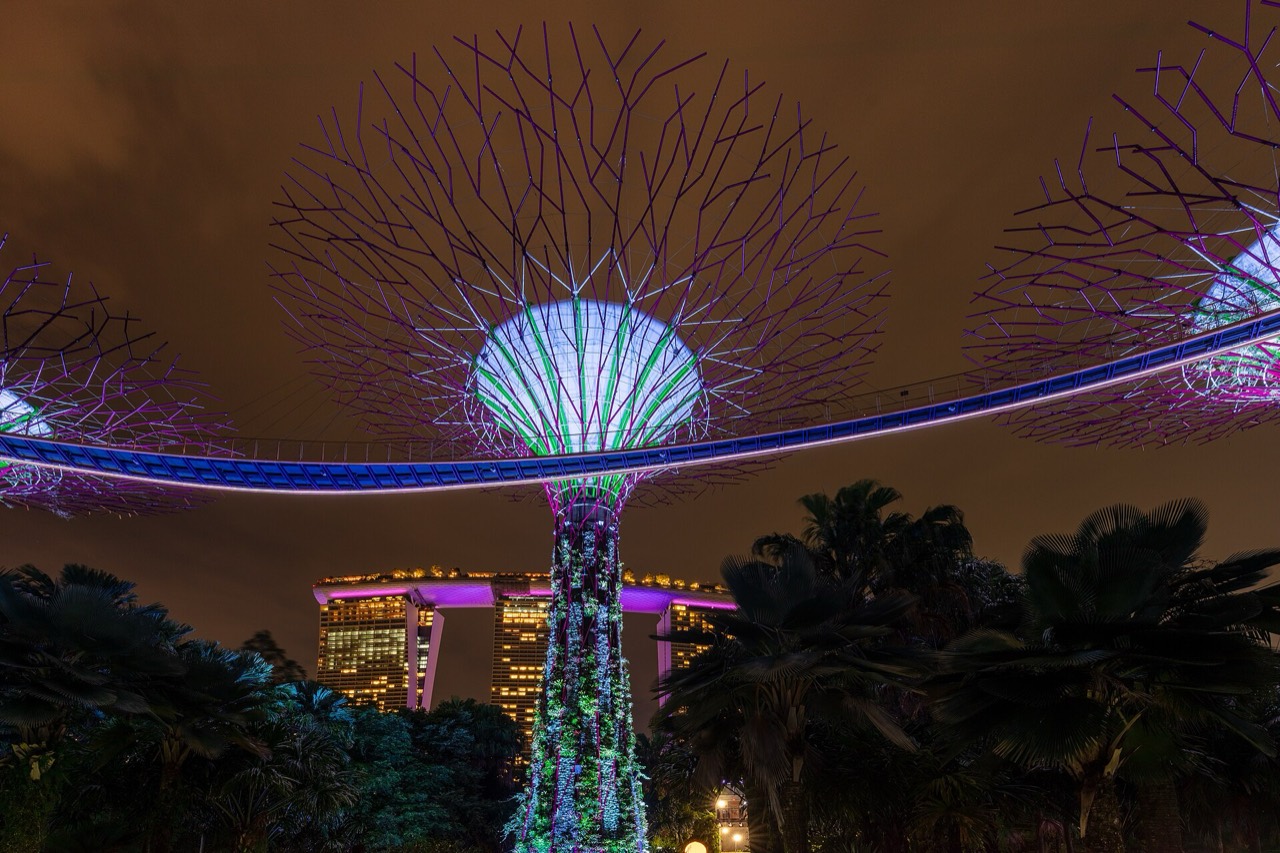
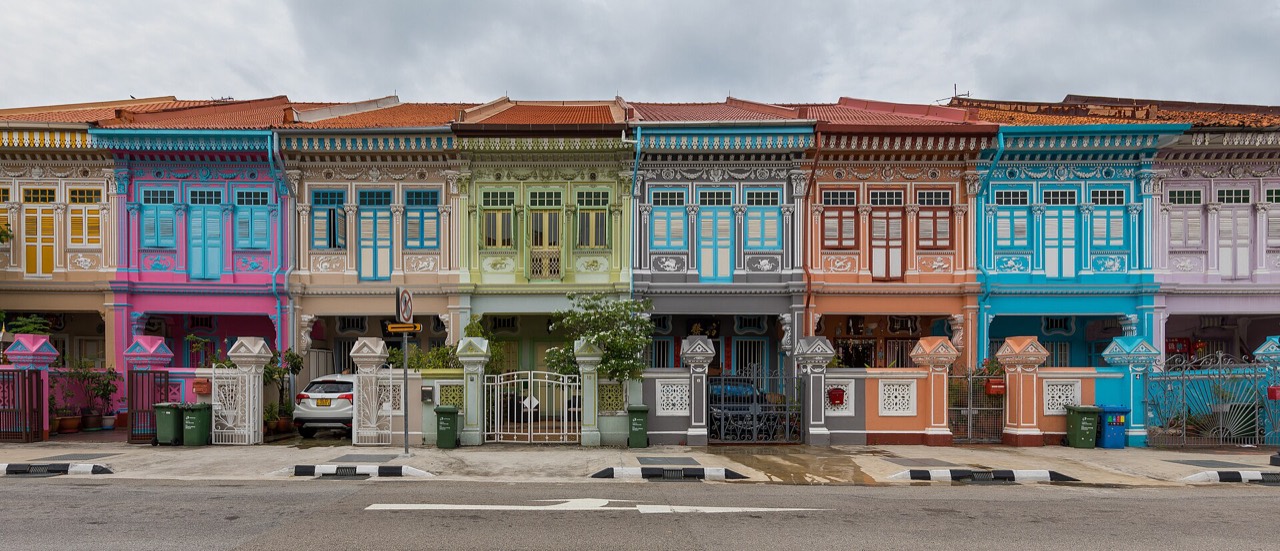
Gardens by the Bay earns its postcards — go at dusk, catch the free Supertree light show (nightly, twice), and decide honestly whether you need the paid domes (the Cloud Forest, yes; on a short trip, that’s the one). Katong / Joo Chiat is the underrated half-day: the pastel Peranakan terraces of Koon Seng Road, laksa arguments, and vintage shops — the city at its most photogenic and least touristed. Tiong Bahru’s low-rise art-deco estate does bookshops-and-bakeries better than anywhere between here and Melbourne. Sentosa is the beach day — Tanjong Beach at the quiet southern end has long been the informal gay-leaning stretch, best on Sunday afternoons; manage expectations (this is a groomed resort island, not Sitges) and enjoy it for what it is. Kampong Glam stacks the gold-domed Sultan Mosque, the perfume traders of Arab Street and the murals-and-vintage of Haji Lane into three compact blocks — queer-owned boutiques included; Little India is the city’s best sensory reset, flower garlands and dosa smoke and a produce market that never sleeps. The National Gallery holds Southeast Asia’s best art collection inside the old Supreme Court — two rainy-afternoon hours well spent. And the Merlion-to-Marina-Bay waterfront walk at blue hour remains, corny as it sounds, genuinely great.
Eat like Singapore argues about it
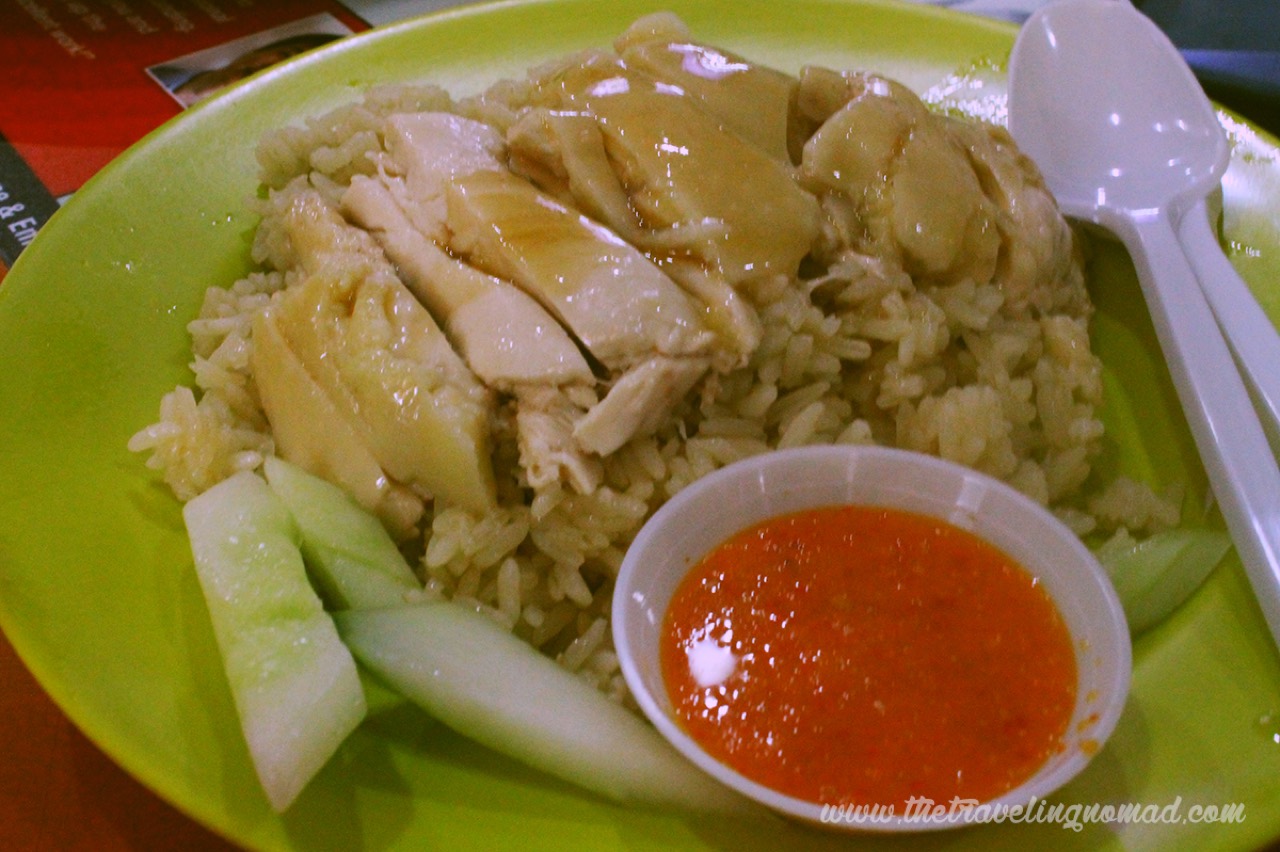
Hawker culture is UNESCO-listed and every meal is a referendum. The non-negotiables: Hainanese chicken rice (join the Tian Tian queue at Maxwell Food Centre once, then find your own allegiance), laksa in Katong where it was born, satay grilled over charcoal at Lau Pa Sat’s evening street, chilli crab as the one big-ticket blowout, and kaya toast with kopi and soft eggs as the hangover protocol after a Neil Road night — the strip is surrounded by kopitiams that open at dawn. Budget note for China-route travellers: hawker meals at S$5–8 are the great equaliser in an otherwise expensive city; eat like a local and the food budget collapses to mainland levels.
Day trips & add-ons
Bintan (Indonesia) is the proper beach upgrade — under an hour by ferry from Tanah Merah to resort sand that Sentosa can’t match; day-trippable, better overnight. Johor Bahru across the causeway is the cheap-massage-and-mall day out (bring your passport, go midweek, expect queues). Pulau Ubin is the surprise: a ten-minute bumboat to a car-free island of kampong houses and mangrove boardwalks — the Singapore that predates the skyline, best explored by rented bicycle. And if the route continues north, Bangkok is a two-hour hop into an entirely different gear of nightlife.
Building the China pairing
The practical case, with numbers. Changi connects non-stop to the whole flagship series: Hong Kong and Taipei in under five hours, Guangzhou and Shenzhen in about four, Shanghai and Chengdu in five to six, Beijing in six and a half. Most Western passports get 90 days visa-free in Singapore and qualify for China’s visa-free or 240-hour transit schemes (check yours), which makes a triangle like home → Singapore → two or three Chinese cities → home close to paperwork-free.
Singapore first works best for first-time China travellers: land soft in English, beat the jet lag by the pool, install and test the whole China kit — eSIM, Alipay, offline maps — on fast open internet, then arrive on the mainland already functional. Singapore last suits veterans: after two firewalled, chilli-oiled, gloriously intense weeks, three days of beaches, saunas that take contactless, and a Neil Road session where you can post the photos as you take them is the right kind of landing. Either way, don’t give it fewer than two nights — the city deserves more than a layover, and Jewel’s waterfall doesn’t count as seeing it.
TL;DR: the practical machinery
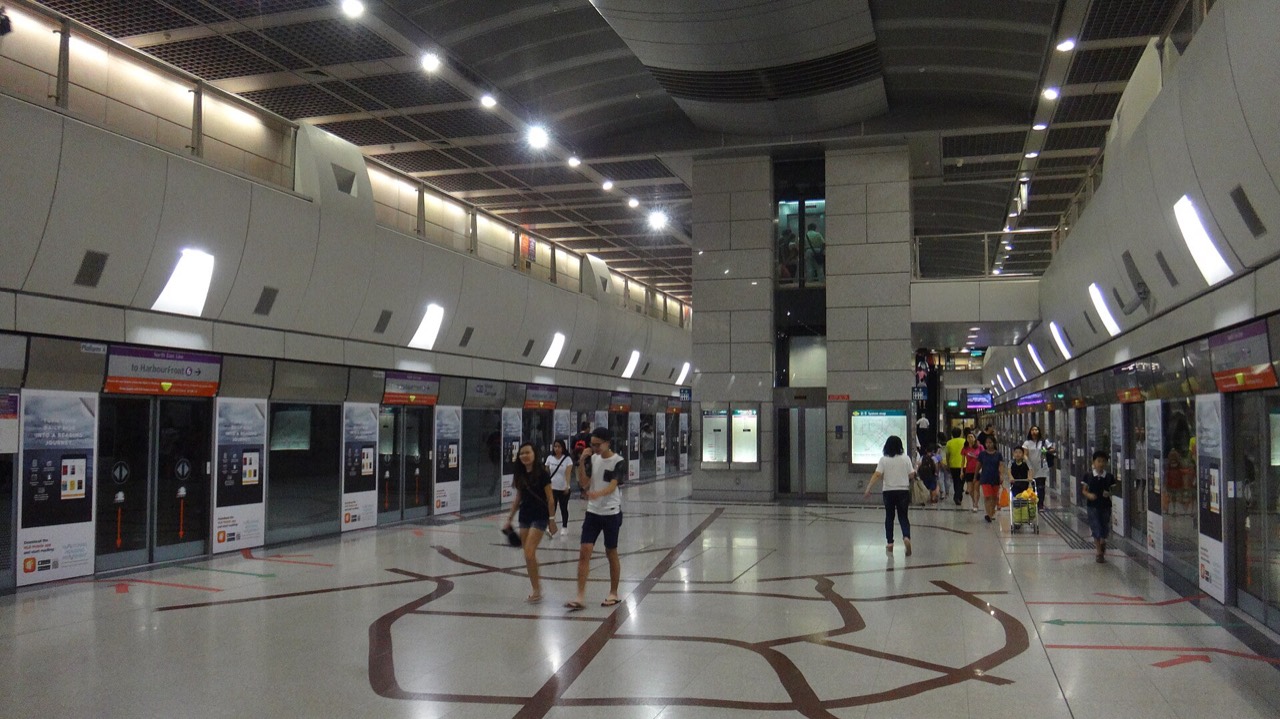
Getting in: most Western and many Asian passports enter visa-free for 90 days; Changi to the Tanjong Pagar hotels is 20 minutes by MRT or taxi (and Jewel’s indoor waterfall is worth building a longer layover around in its own right). Getting around: the MRT is fast, cold and honest — tap any contactless bank card, no local card needed; last trains run around midnight, Grab fills the gap. Money: cards everywhere; a 10% service charge plus GST appears on most bills, and beyond that nobody tips. Weather: equatorial — any month works, every afternoon might storm, plan indoor fallbacks. Connectivity: open internet; airport eSIMs and SIMs are cheap and instant — and if China is your next stop, buy your China eSIM here while everything still downloads fast. Rules worth respecting: Singapore’s famous strictness is real where it matters — drug offences carry penalties severe beyond any Western frame of reference, including for residues in your system on arrival; e-cigarettes are banned outright. The chewing-gum stuff is the myth version; the drug laws are not. Safety: statistically among the safest cities anywhere, at any hour, for anyone — including us.
The bottom line
Singapore will never be the wild night of your Asia trip, and it isn’t trying to be — what it offers is rarer: a place where the gay scene is legal, walkable, welcoming and completely unstressful, wrapped in the best food and the smoothest logistics on the continent. As the opening move of a China route it lets you land soft and launch prepared; as the closing move it’s three days of beaches, chicken rice and open internet to process everything the mainland just showed you. One strip, one great sauna, one park full of pink once a year — and every flight home leaves from the world’s best airport. There are worse ways to bracket an adventure.


