
Beijing on its own terms
Let’s set the frame honestly, because it will save you a mismatched trip: Beijing is not Chengdu. The capital’s gay scene is smaller than its size suggests, quieter than its history deserves, and it runs on discretion the way the whole city runs on protocol. If you land expecting a strip of rainbow-flagged bars you’ll be disappointed by dinnertime.
And yet. Beijing has something no other Chinese city can offer: Destination, the mainland’s longest-running gay megaclub, pushing through its third decade a stone’s throw from the Workers’ Stadium — and a daytime city so overwhelming that the world’s greatest queer nightlife would still play second fiddle to it. The Forbidden City, the Great Wall, the Temple of Heaven, a thousand hutong lanes: empire by day. Then, after dark, a scene that works more like a speakeasy circuit than a gaybourhood — one great club, a handful of friendly rooms, and everything else arranged over Blued and WeChat. This guide is the long version of how to work it, cross-checked against Chinese platforms and the venues’ own channels as of July 2026. The short version with the map lives on our Beijing city hub.
Being gay in Beijing: the questions everyone asks
Is Beijing actually gay-friendly?
Friendly in practice, formal in public. Nobody will trouble two men sharing a bed, a table or a dance floor, and anti-gay violence is genuinely rare — Beijing is one of the safest big cities on earth to walk at 3am. But this is the seat of government: there’s more security theatre than anywhere else in China (bag scans at every metro station, ID checks around Tiananmen), and the queer scene keeps its head correspondingly lower. The local mode is the same one we describe in the China safety explainer — discretion outside, freedom inside — with the dial turned one notch further towards discretion than in Chengdu or Shanghai. Save the hand-holding for Sanlitun after dark (our PDA guide has the full calibration).
What happened to Beijing’s queer institutions?
The honest political context, kept short: the 2010s were Beijing’s queer golden age — the Beijing LGBT Center ran counselling and community programmes for fifteen years, the Beijing Queer Film Festival played cat-and-mouse with censors and usually won, and clubs like Funky and Adam’s packed out weekends. The space has narrowed hard since: the Center announced its closure in May 2023 citing “forces beyond our control”, the festival survives only in exile and fragments, and those clubs are gone. What endures is the commercial and personal layer — Destination, the app-organised parties, the friendship circles — and, for what it’s worth, a queer history in this city that runs deeper than anywhere else in China. East Palace, West Palace (1996), the mainland’s first gay feature film, is set here; our Beijing queer history piece tells the longer story, and it’s worth ten minutes before you fly.
Which part of town should I base myself in?
One answer again: Sanlitun / Workers’ Stadium (Gongti), in Chaoyang District. It’s the old embassy quarter turned nightlife-and-shopping engine, it holds Destination and every queer-friendly bar that matters, and it’s well connected for the sights. Everything in the where-to-stay section below is within fifteen minutes of it. The historic alternative is Dongdan, the older, more local queer quarter near the city centre — culturally significant, still quietly active, but with nothing a visitor can reliably walk into; know it as context rather than an itinerary stop. Skip basing yourself near the Forbidden City itself: atmospheric by day, dead and taxi-dependent by night.
What are the apps, and do they work?
Identical mechanics to the rest of China, with extra weight on the apps because the venue count is low: Blued (international version: HeeSay) is the local standard and the noticeboard for what’s on; grids in Chaoyang are dense and responses are friendly to visitors. Grindr and all Western apps are blocked on local networks — a travel eSIM routes around the firewall without any VPN fiddling, and the apps guide covers the rest. Beijing-specific note: expect more faceless profiles than in the south — civil servants, state-enterprise staff and teachers have careers that reward caution. Patience and a friendly opener go a long way.
Are there any regular parties or events?
Destination is the events calendar: its own channels were advertising fresh party nights (a go-go revue billed “MEAT”, among others) for the very week we wrote this in July 2026, and the club programmes drag, dancer shows and themed nights most weekends. Beyond Des, parties are pop-up by nature — organised on WeChat, announced days ahead, held in rented mainstream venues — so treat Blued and the bar staff as your listings page. There is no Pride event of any kind; don’t come in June expecting one.
Is the scene really that small?
Countable on two hands, yes — but small isn’t the same as thin. Because everything funnels through a few rooms, the crowd at Destination on a Saturday is the whole ecosystem at once: students, bears, drag fans, forty-something couples, the odd diplomat. Chengdu spreads its scene across a dozen venues; Beijing compresses it into one glorious, sweaty terminal. There are worse trades. (Subculture note: the capital has a sizeable, sociable bear crowd — dinners and WeChat groups more than dedicated venues — and our China bear community guide explains how to plug in.)
Where the scene lives: gay Beijing’s geography
Three coordinates and you’ve got the whole map:
Gongti West Road. The western flank of the Workers’ Stadium is the scene’s centre of gravity and has been since 2004 — Destination sits at number 7, having outlived every neighbour and even the stadium itself, which was demolished and rebuilt around it between 2020 and 2023. The blocks around it hold late-night restaurants and mainstream clubs, so the street stays busy and anonymous until dawn — ideal cover, if you think about it, and Beijing’s scene always has.
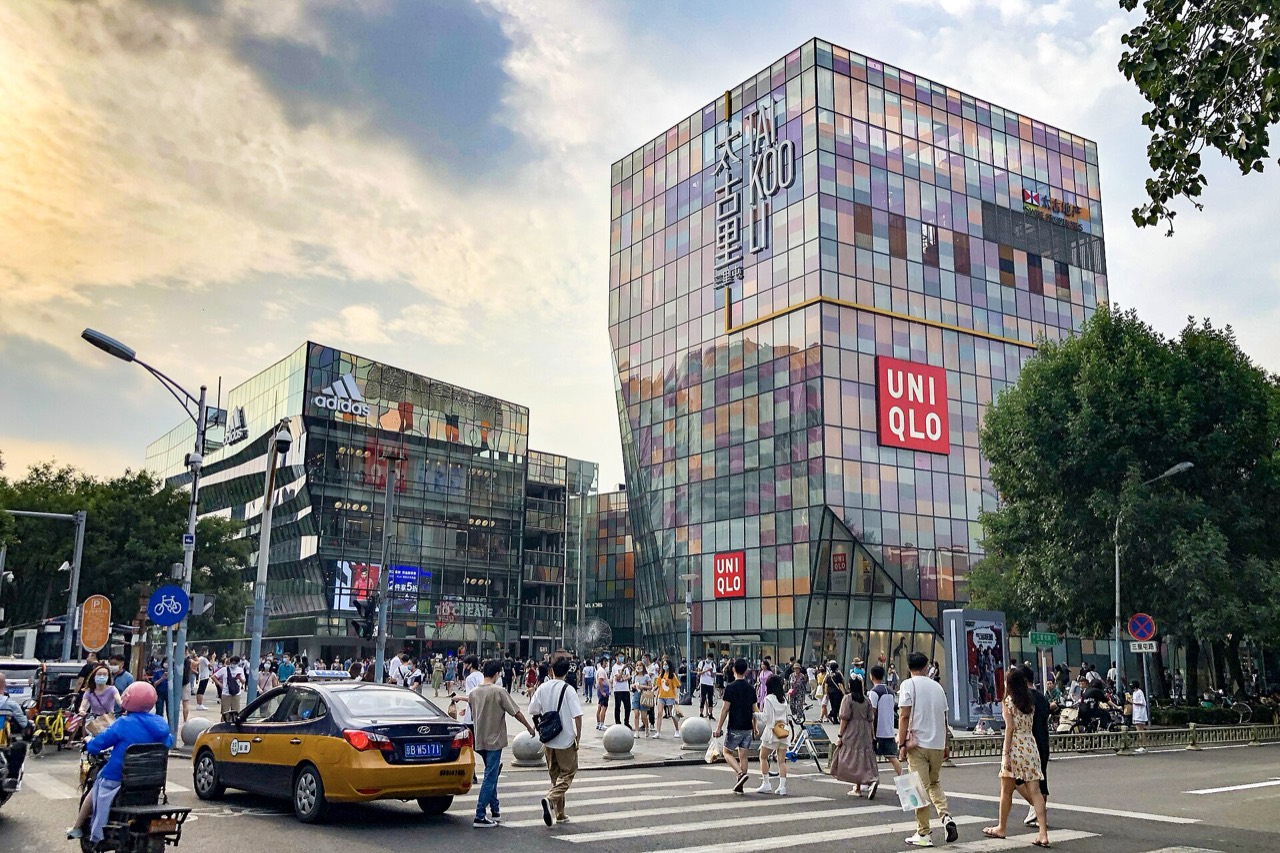
Sanlitun. Ten minutes’ walk east: Taikoo Li’s open-air shopping lanes, the embassy back-streets, and the bar scene where queer Beijing actually does its midweek drinking — not in gay bars (barely any survive) but in gay-comfortable ones, led for years by Mesh at The Opposite House. This is also where you’ll sleep, most likely.
Dongdan. A few kilometres west, near the central axis: the historic queer quarter, whose name was once slang shorthand for gay Beijing itself. Its bathhouse-and-park culture has faded from public view, but older locals still speak of 东单 the way Londoners speak of Earl’s Court — a place the community outgrew without ever quite leaving. Visit for the daytime hutongs and the history, not for a night out.
The venue map with everything pinned is on the Beijing hub.
The club: Destination, and why it’s enough
Destination (目的地) needs introducing properly, because calling it “Beijing’s gay club” undersells what it is: the longest-running gay institution on the Chinese mainland, open since 2004 at 工体西路7号, and for two decades the room where queer China’s capital chapter has actually happened. It sprawls over multiple floors on a loose airport conceit — different “gates” for different moods: a thumping main floor with pole and go-go shows, lounge corners with sofas for the shouted-conversation phase of the night, rotating art exhibitions upstairs (really), and a restaurant bolted on. Entry runs around ¥100 with a drink included; doors from about 9pm, filling properly after 11, running to 5am on Fridays and Saturdays, quieter midweek and traditionally dark on Mondays.
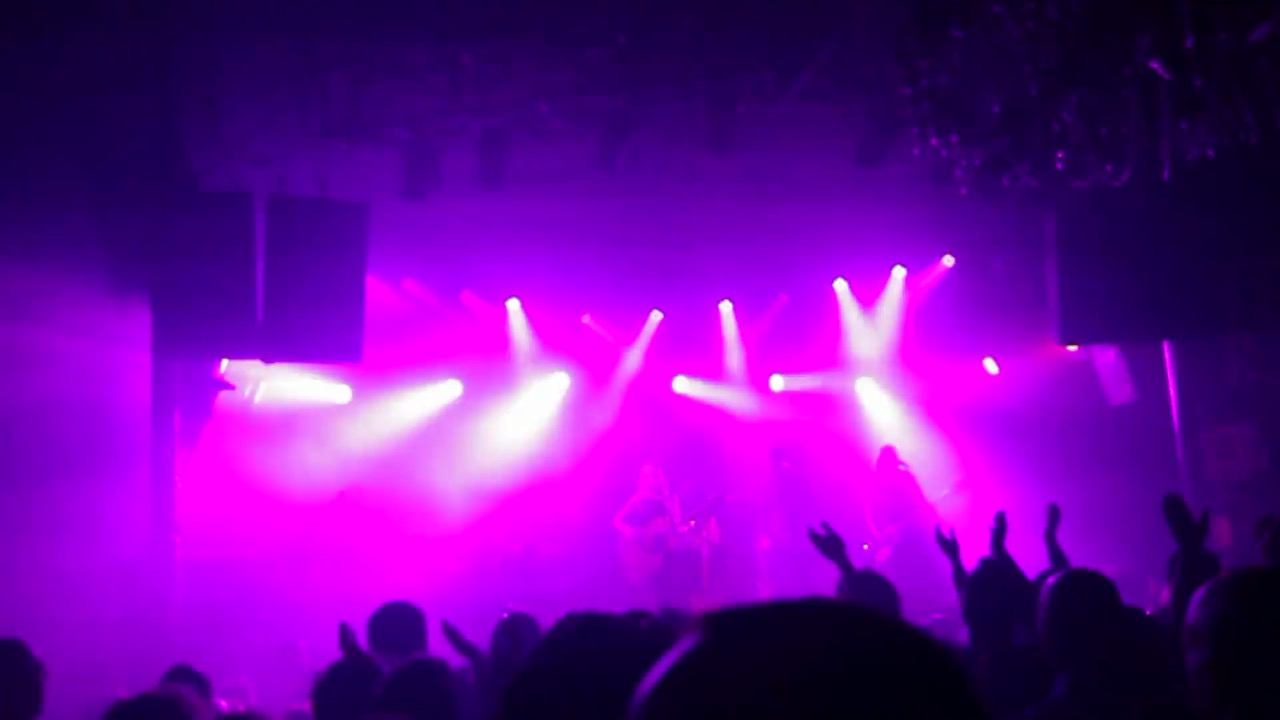
Two things make Des more than a nightclub. First, it’s a community anchor in a city that lost its official ones: it has long partnered with the Chaoyang district CDC to offer free, anonymous HIV testing on site, and its upstairs floors have hosted exhibitions and community events through years when nowhere else could. Second, it’s a survivor — it watched the entire Workers’ Stadium get demolished and rebuilt next door and never missed a weekend, and its own channels were pushing new party nights the week of writing (July 2026). Honest caveats, because we promised them: the cocktails are famously weak (locals order beer or bring the night’s ambitions pre-loaded), the warren of small rooms can fragment the crowd, and busy nights reward keeping a hand on your phone. None of it matters at 1am when the go-go show lands. If you do one gay thing in Beijing, this is it.
How a Des Saturday actually runs: through the door around 11:30 (¥100, wristband, coat check in winter), first lap of the “gates” to find your floor — main room for the show crowd, lounge floor if you’re talking, upstairs if there’s an exhibition on. The dancer show lands around 12:30–1, the floor peaks until 3, and the smart exit is 3:45, before the taxi queue, into a jianbing from whichever street cart is working the door. Solo travellers: stand near the main bar’s corner — it’s the room’s natural conversation eddy, and “第一次来北京” (first time in Beijing) remains an undefeated opener.
The other name you’ll see on older lists is Mix Club, inside the stadium’s north gate — a big, mainstream-leaning room with a drag-show history. The stadium rebuild scrambled everything on that block and we haven’t been able to verify Mix’s current programming to our standard, so treat it as a possible add-on to check on the night via Dianping, not a plan. (Funky, Adam’s and Sanlitun’s Red Dog — the other names that dominated 2010s guides — are all confirmed gone.)
The bars: where queer Beijing actually drinks
Beijing’s surviving bar scene is queer-comfortable rather than queer-branded, and its flagship is Mesh, the design bar off the lobby of The Opposite House in Taikoo Li — Kengo Kuma building, linen drapes, serious martinis, hotel-bar prices. Thursday was the traditional gay night and the DNA stuck: most evenings the room carries a quietly queer, professional crowd that treats it as neutral ground. It’s the correct first drink of a Beijing weekend and the correct place to bring a date you want to impress.
Beyond Mesh, work the Sanlitun back-streets on vibe rather than labels — the cocktail rooms west of Taikoo Li are young, international and completely unbothered by who you came with. You may still find older directories listing names like Kai Bar or Heaven around Sanlitun; those listings predate the area’s repeated redevelopments and we can’t confirm any of them still trade as queer venues, so calibrate expectations (and tell us if you find otherwise on the ground). For the ranked short-list with addresses in copy-paste Chinese, the Beijing bars & clubs guide stays current.
For the girls: the honest word
We won’t pretend: as of July 2026 we cannot point to a single dedicated lesbian bar operating publicly in Beijing — the little Sanlitun ladies’ bars of the 2010s (Huoli was the best-known) are gone, and nothing has replaced them above ground. What exists instead is a salon culture with real history — Beijing’s lesbian community has run discussion groups, film nights and social mixers since the early 2000s, now organised through WeChat circles that a friendly local connection unlocks quickly. Destination’s big nights draw a healthy queer-women contingent, and Mesh is comfortable territory. If Chengdu is on your route, its lesbian club Queen Bee (蜂王) is covered in our Chengdu guide — the contrast says everything about the two cities.
A deeper queer history than anywhere in China
Beijing’s scene may be small today, but its queer pedigree is the country’s richest, and knowing a little of it changes how the city reads. Start with the name Dongdan: for decades after the 1980s, the park and streets of that district were such a fixture of gay Beijing that “going to Dongdan” needed no further explanation, and the community’s own slang for itself — “comrades” (同志) — radiated out from the capital’s wordplay to all of Chinese. The first mainland film to put gay life on screen, East Palace, West Palace (1996), takes its title from the code name for the public conveniences flanking the Forbidden City — it was shot clandestinely, premiered abroad, and got its director Zhang Yuan’s passport confiscated; queer Beijing has always made its art under pressure.
The 2000s and 2010s built institutions on that ground: the Beijing Queer Film Festival ran from 2001 in a permanent state of relocation — screenings moved between universities, art villages and, more than once, private apartments, one step ahead of cancellation orders — and the Beijing LGBT Center opened in 2008 to offer counselling, trans support lines and community research. Destination’s upper floors doubled as gallery and classroom through all of it. The narrowing since 2018 took most of that superstructure away — the Center announced its closure in May 2023 with a Weibo post citing “forces beyond our control”, a sentence every Chinese queer reader understood precisely — but it did not take the people, the memory or the club. The full story, from imperial male favourites to the present, is in our Beijing queer history guide; read it and the city’s quietness starts to look less like absence and more like endurance.
The night-out playbook
Time it like a local: dinner at 8, first drink at Mesh around 10, Des at 11:30, out by 4. Nothing gay happens before 10pm and Des doesn’t breathe until 11.
Getting home: the metro closes around 11pm–midnight (and every station entry has a bag scan — budget a minute), so the night ends in a Didi. They’re cheap, ubiquitous and safe at 4am; paste your hotel’s Chinese address in before you go out. Set-up: metro & Didi guide.
Money: Des takes entry at the door (cash or Chinese wallets); everything else is Alipay/WeChat Pay. Sort both before you fly with the payments guide.
Discretion mechanics: photography inside gay venues is more sensitive here than anywhere in China — shoot the stage if you must, never the crowd. Don’t discuss politics with strangers as an icebreaker; Beijing queers do irony, not manifestos. And the dating-app “let’s meet at this bar I know” inflated-bill scam operates in the capital as everywhere — you pick the venue, always (scams guide).
Dress for the door, and for February. Des has no dress code beyond effort, but Beijing winters are −10°C and the club runs a proper coat check (a few yuan) — use it, because the 4am taxi queue in January is a survival event. Summer nights, by contrast, end with street beers outside the north gate like everywhere else in China.
Bring cash-app redundancy. Beijing is the one city where a venue occasionally wants the door fee in cash or a Chinese wallet only — keep ¥200 in notes as backup, and screenshot your hotel’s name card in Chinese for the driver home.
Etiquette beyond that — toasting, tipping (none), promoter culture — is the same nationwide playbook: China nightlife etiquette.
Saunas, spas and the honest word
Beijing’s gay bathhouse scene exists, but it is the most underground in China’s big four cities — small basement operations that change names and doors often, signposted in Mandarin or not at all, and frankly hard to use as a visitor without a local steer. The one name with a persistent public listing is Red Dragon, a men-only, 24-hour operation reachable via WhatsApp/WeChat rather than a walk-up address — which tells you the register the whole scene operates in. Message ahead, expect a local crowd and local prices, and read our bathhouse etiquette guide before your first visit anywhere in China. As always: what can’t be found publicly, we don’t print — and in the capital especially, follow the community’s own lead on discretion: no photos anywhere near a venue door, no pinning locations in public chats, and if a place asks for a member’s introduction, that’s the system working as intended, not a slight.
The above-ground alternative is excellent, though: Beijing Power Spa is the capital’s established gay-owned massage house — running since 2008, certified therapists, oils-scrubs-facials done properly, by Hujialou station on the East Third Ring, open 11am–1am with 24-hour out-call to hotels. It’s a legitimate spa rather than a euphemism, and after a Great Wall day your calves will call it the best money of the trip. (A second name, Spa de Feng, appears in current directories with out-call service; we haven’t used it, so we list it as a lead rather than a recommendation.) Regional overview: gay saunas guide.
Where to stay
Sleep in Chaoyang, full stop — the full ranked list with booking notes is in the Beijing hotels guide. The short version:
BEI Zhaolong (JdV by Hyatt, mid-priced) is the scene pick and the one we’d book first: a pop-art reinvention of an iconic old Sanlitun property — the first JdV in Asia — sitting on Gongti North Road minutes on foot from Taikoo Li one way and Destination the other. Young crowd, colourful rooms, and the only address on this list from which you can stumble home.
InterContinental Sanlitun is the five-star that shares the scene’s postcode: sleek tech-forward rooms at the head of Sanlitun Road, club lounge on the 21st floor, embassy quarter on the doorstep. The practical luxury choice for a first visit — nightlife one way, a straight metro run to the sights the other.
Éclat, in the slanted glass pyramid of Parkview Green, is for the art-obsessed: one of Asia’s largest private Dalí collections in the corridors, Warhols by the lifts, twenty fantasy-themed suites each with a private five-metre pool. Theatrical, intimate (100 rooms), and very at home with queer guests.
Conrad gives you MAD Architects’ curved-glass landmark on the East Third Ring — corporate-polished, superb breakfast, CBD-convenient; a taxi from the fun but a serene base. And the Sofitel at Jianguomen is the sightseer’s all-rounder: metro at the door, Tiananmen a straight ride west, Sanlitun a short hop north, French-polished service in between.
Two men, one bed: a non-event at all of them — check-in photographs every passport regardless of who you love, and Trip.com reads Chinese inventory most reliably.
Daytime Beijing: the best sightseeing city in China
No contest, and no way to do it justice in a nightlife guide, so here’s the queer traveller’s edit:
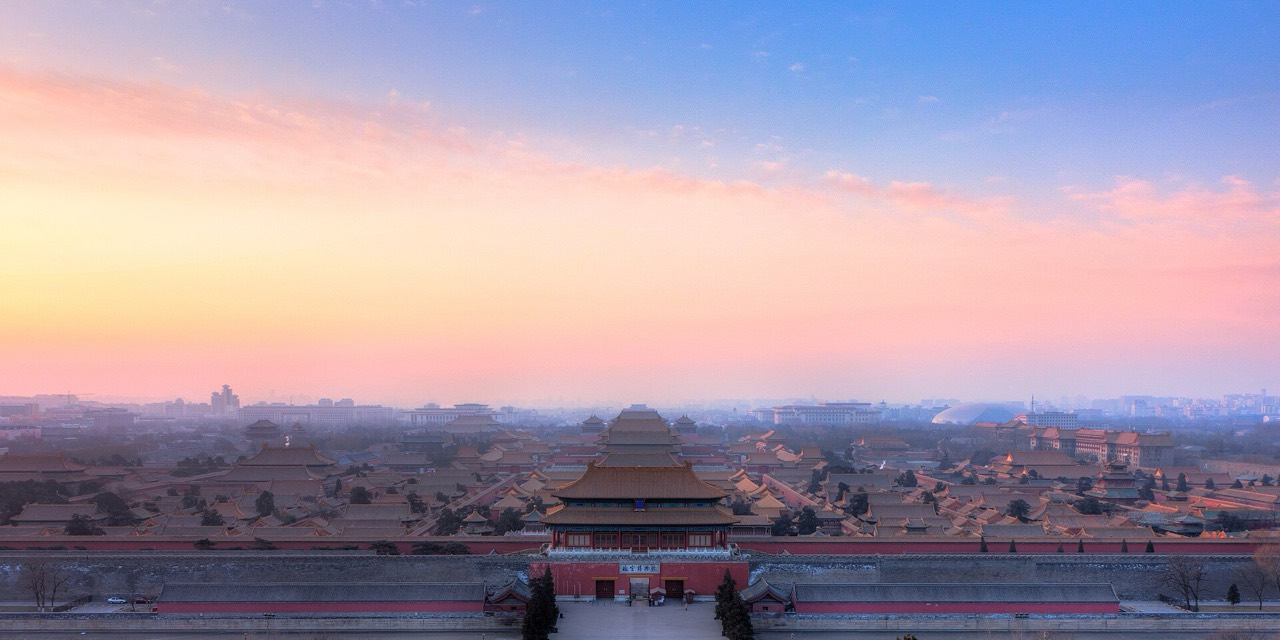
The Forbidden City demands a full morning and advance planning: tickets release seven days ahead on the official WeChat account and sell out, passport required to book and enter, closed Mondays. Walk it south to north, exit at the back gate, and climb Jingshan Park’s hill for the golden-roofed panorama at sunset — the single best view in Beijing, ¥2 entry.
The Temple of Heaven is best at 7am — not for the famous hall but for the park around it, where Beijing’s retirees fan-dance, sing opera, play cutthroat cards and practise calligraphy in water on the paving stones. It’s the city’s soul on free display, and a gentle reminder of who your friends’ parents are.
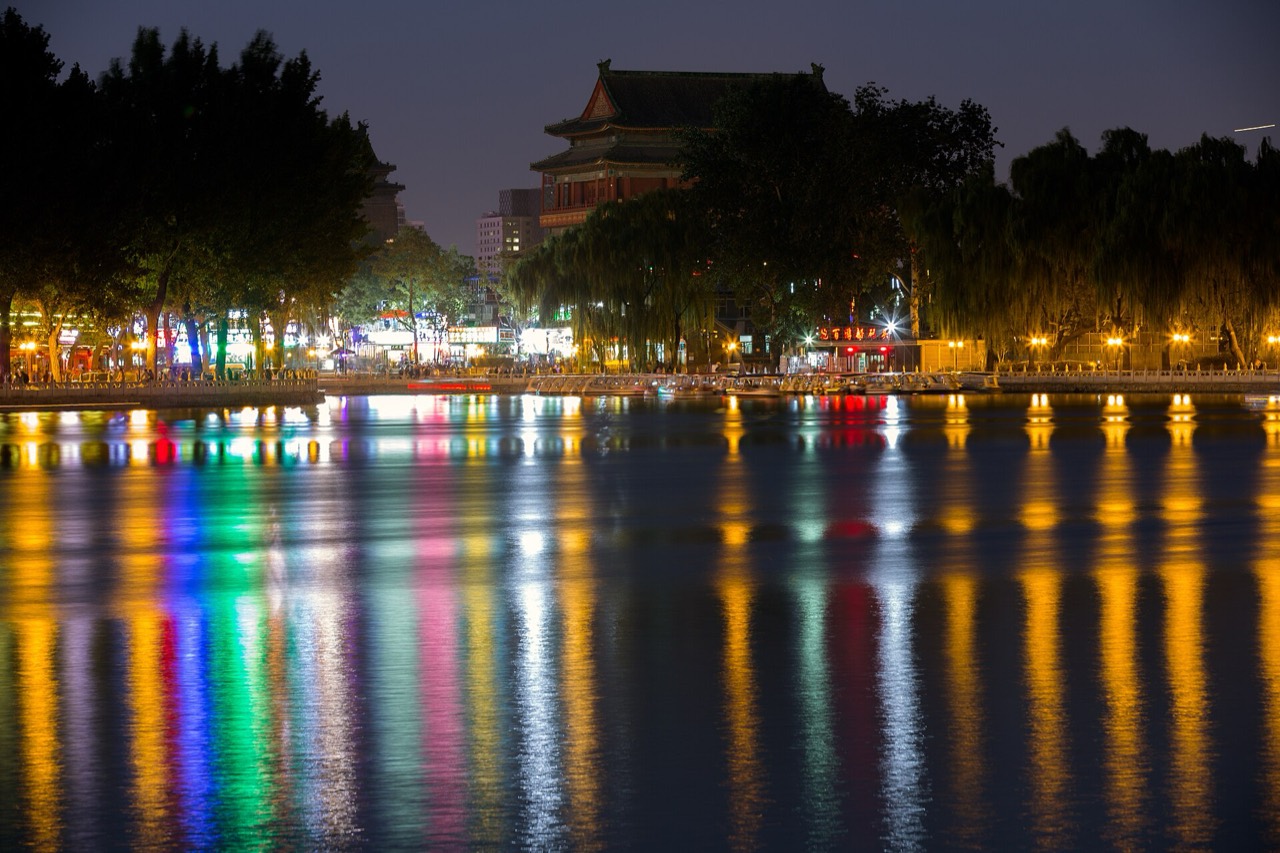
The hutongs reward aimlessness: skip peak-hours Nanluoguxiang and drift the quieter lanes around Wudaoying, Guozijian and Baochao instead — craft coffee, courtyard bars, vintage shops, and the low grey-brick geometry that makes Beijing Beijing. End at the Drum and Bell Towers, then take the lakeside path around Houhai as the lights come on: the closest thing the capital has to a romantic promenade, and nobody looks twice at two men walking slowly.
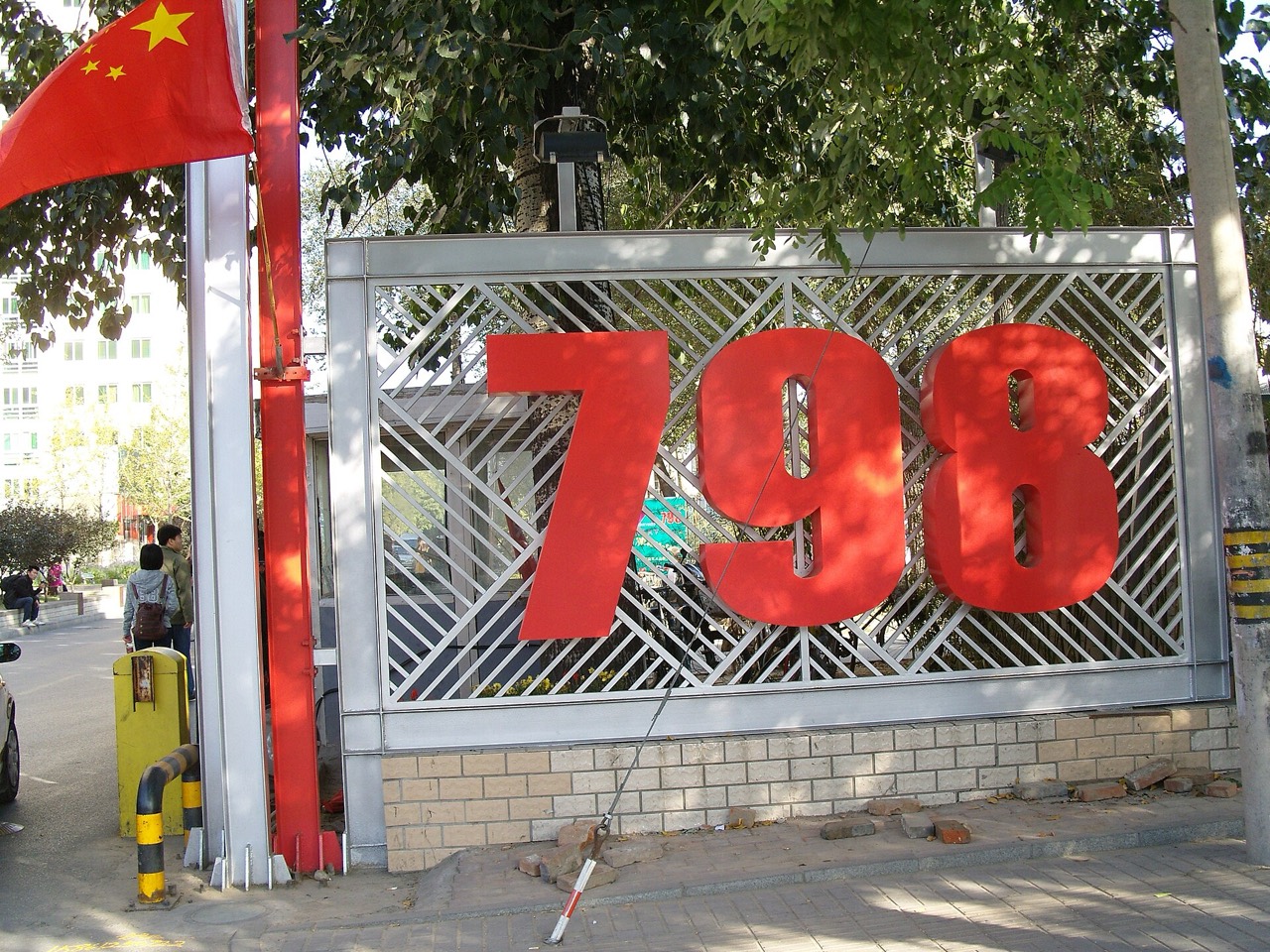
798 Art District fills a half-day with contemporary galleries in decommissioned East German-designed factories — UCCA is the anchor, the fringes are the fun, and the whole place runs quietly queer-adjacent in staff and sensibility. Pair with a Chaoyang lunch and you’re back in Sanlitun by aperitivo.
The Lama Temple (雍和宫) is the incense-wreathed Tibetan Buddhist complex that even temple-fatigued travellers love — its final hall holds a 26-metre Maitreya carved from a single sandalwood trunk, and the surrounding Guozijian streets are the prettiest café territory in the old city. Across town, the Summer Palace is the imperial lake-garden the Forbidden City makes you crave: rent the boat, walk the Long Corridor, and watch Kunming Lake go bronze at dusk. Museum people should know the National Museum flanking Tiananmen Square is free (passport booking) and world-class; art people already know 798.
One seasonal cheat: in late October and early November, Beijing’s ginkgo avenues — Diaoyutai’s east wall, the Ditan Park rows, the lane outside the Lama Temple — turn violently gold for about two weeks, and the whole city takes portraits under them. If your dates land in that window, build an afternoon around it; it’s the most photogenic fortnight of the Beijing year.
Eat like the capital
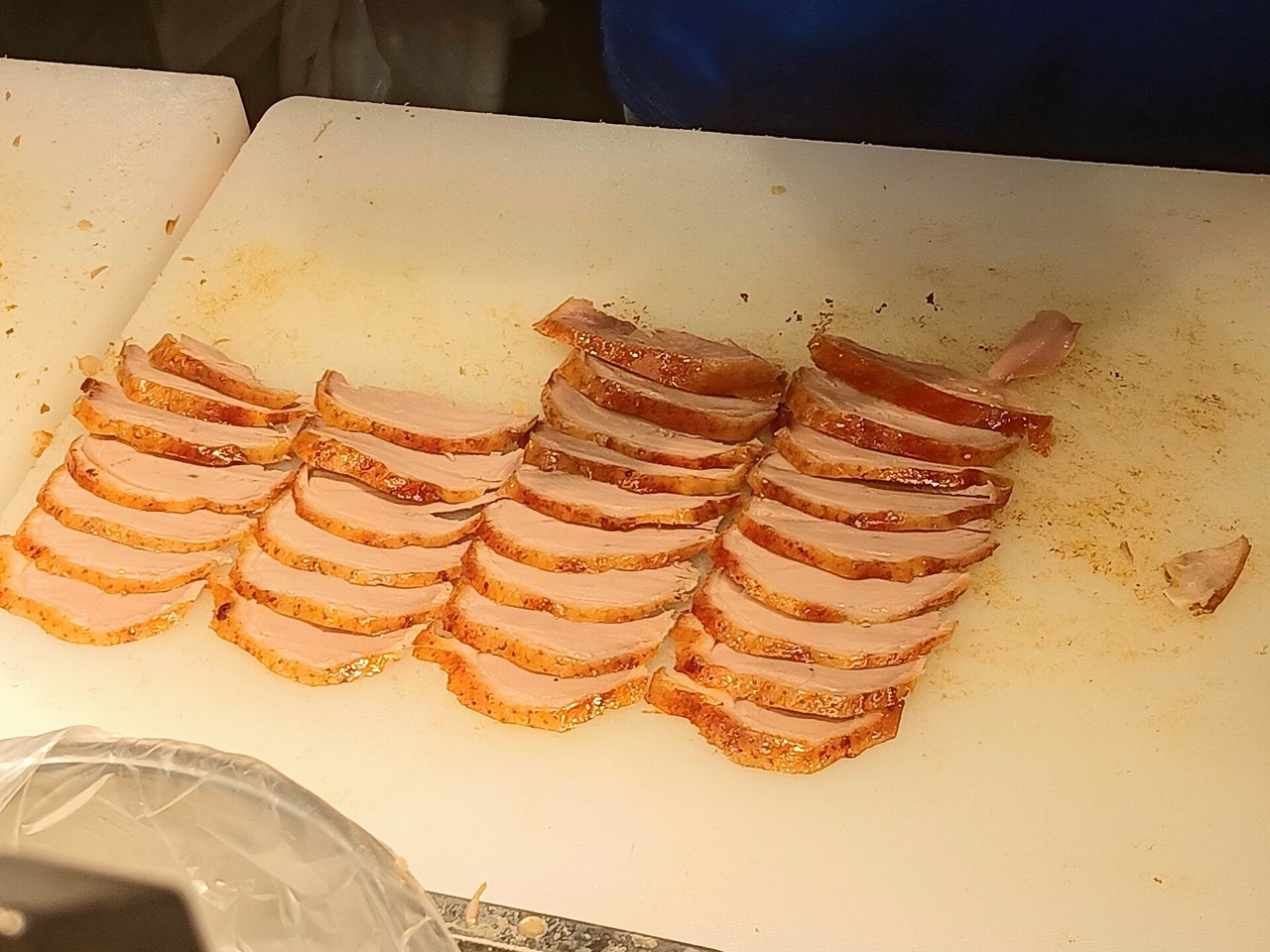
Peking duck first, obviously — and the local consensus pick is Siji Minfu (四季民福), the perpetually-queued chain whose Forbidden City-view branch pairs lacquered skin with the moat at dusk; book or queue early. Beyond the duck: copper-pot lamb hotpot (老北京涮羊肉) is the capital’s winter religion — paper-thin lamb swished through clear broth and dragged through sesame sauce; zhajiangmian, the fried-sauce noodle, is the everyday lunch; a street-window jianbing is the correct breakfast and the correct 4am exit from Destination; and Gui Jie (簋街), the all-night red-lantern restaurant mile, is where the whole city — club kids included — ends up over crayfish at 2am. The brave can chase a bowl of douzhi, fermented mung-bean milk, and earn a local’s respect the hard way.
Two more registers worth knowing. First, imperial-style dining: Beijing is where banquet cuisine was codified, and one evening of it — a courtyard restaurant in a converted hutong mansion, dishes with two-hundred-year-old names — is worth the splurge for the theatre alone; your hotel concierge’s booking list is genuinely useful here. Second, the hutong snack canon: lamb skewers off a charcoal grill at a plastic-stool joint, lǘdagunr (“rolling donkey” rice-flour rolls) from a market window, candied hawthorn tanghulu in winter, and boiled lamb tripe if you’ve graduated past douzhi. The rule that never fails in Beijing: queue length beats review score, and anywhere full of grandmothers at 11:30am is correct. Vegetarians and the spice-averse have an easier time here than in Sichuan — northern food runs wheaten and savoury rather than fiery. Full menu strategy, characters included: the food guide.
Day trips: the Wall and the port city
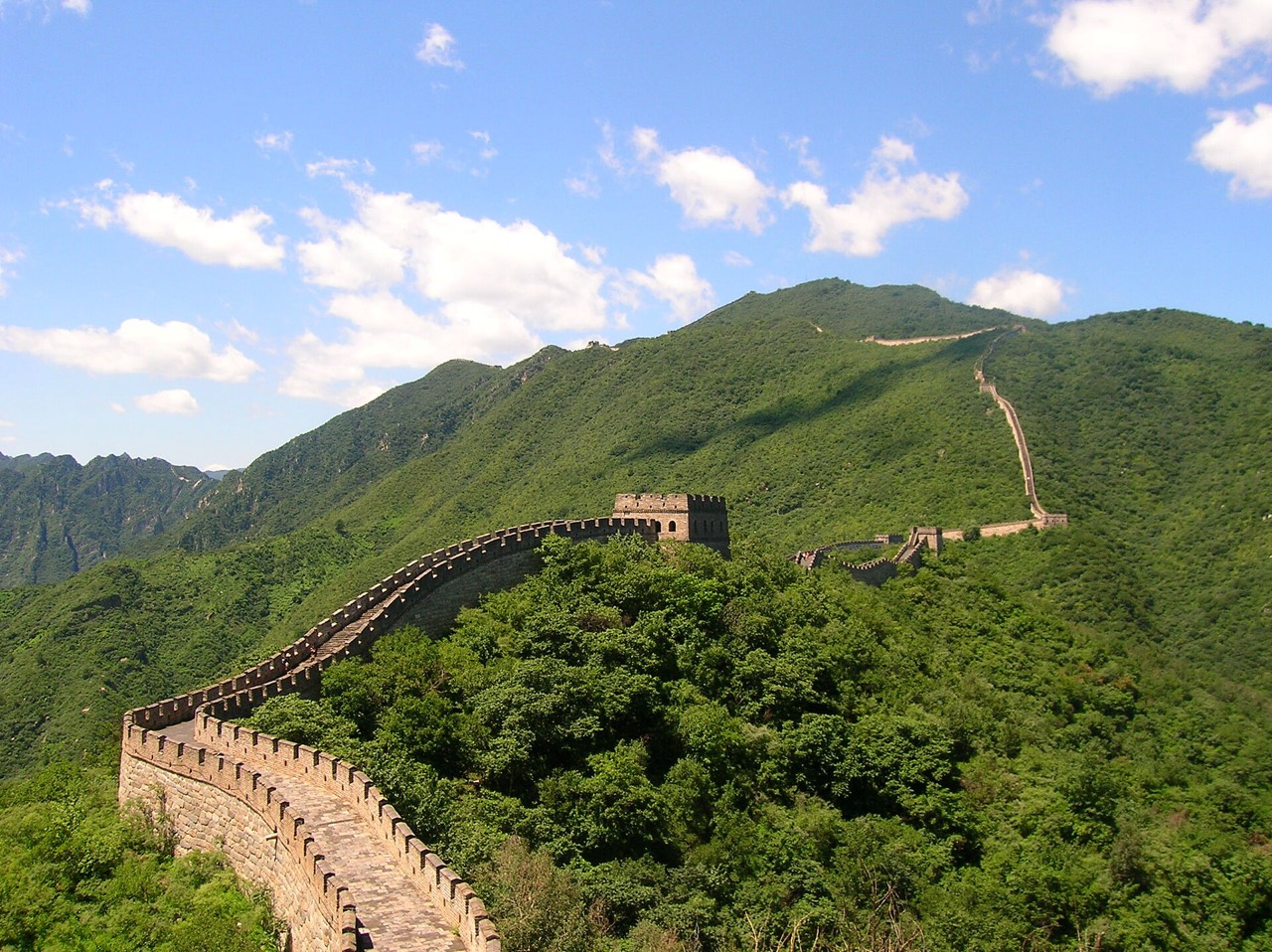
The Great Wall is non-negotiable and the right section is Mutianyu: restored but rarely rammed, forested ridgelines, a cable car up and — the correct life choice — a toboggan down. About 90 minutes north-east by pre-booked car or the direct tourist bus; leave by 7:30am and you’ll walk stretches alone. Hardier hikers talk about Jiankou’s wild sections; go with a guide or not at all. Tianjin, the old treaty-port city of European facades and honest street food, is 30 minutes by high-speed rail and makes an easy contrast day — our Tianjin hub has the bones of a visit. For an overnight twist, Gubei Water Town pairs a rebuilt canal village (touristy, but prettily done, and lit like a lantern festival after dark) with the Simatai section of the Wall — the only stretch you can climb at night, watchtowers glowing up the ridge; couples rate it the most romantic escape within two hours of the capital. And if the itinerary rolls onward, Beijing is the natural top anchor of the high-speed-rail circuit south — Xi’an is four and a half hours, Shanghai four and a half on the fast trains, and Chengdu’s warmer scene (guide here) about eight, all bookable on Trip.com a few days out.
The perfect queer weekend in Beijing
Friday. Land, drop bags in Sanlitun, and ease in: hutong wander around Wudaoying as the lanes go gold, dinner of copper-pot lamb hotpot nearby, then the first drink at Mesh — late enough that the after-work crowd has settled in. If the flight was long, this is the night to end early; Beijing days are calf-punishing and Saturday is the main event.
Saturday. Forbidden City at opening (you booked seven days ago), out the north gate by noon, up Jingshan for the panorama, long dumpling lunch, nap — non-negotiable — then duck dinner at Siji Minfu, a cocktail in the Taikoo Li back-streets, and Destination from 11:30 until the go-go show, the floor, and the 4am jianbing have all had their way with you.
Sunday. Sleep in, then choose your recovery: the gentle version is Temple of Heaven park life and a massage at Power Spa; the ambitious version is the early car to Mutianyu, walking the Wall into the afternoon quiet, and a last Houhai lakeside stroll as the lanterns come on. Either way, end in a hutong courtyard with tea or a beer and toast the most underrated queer city in Asia. Rolling on? The two-week China route picks up from here.
TL;DR: the practical machinery
When to come
September and October are Beijing’s glory — dry gold light, ginkgo avenues, the Wall in autumn colour. April–May is the runner-up (with the odd sand-tinted sky); summer is hot and stormy but functional; winter is brutally cold and bone-dry, though the Forbidden City under snow is a once-in-a-life photograph. Avoid Golden Week (1–7 October) at all costs — the entire nation visits its capital (why, and what to do instead) — and Lunar New Year empties the scene. Seasonal detail: best time to visit China.
Getting in
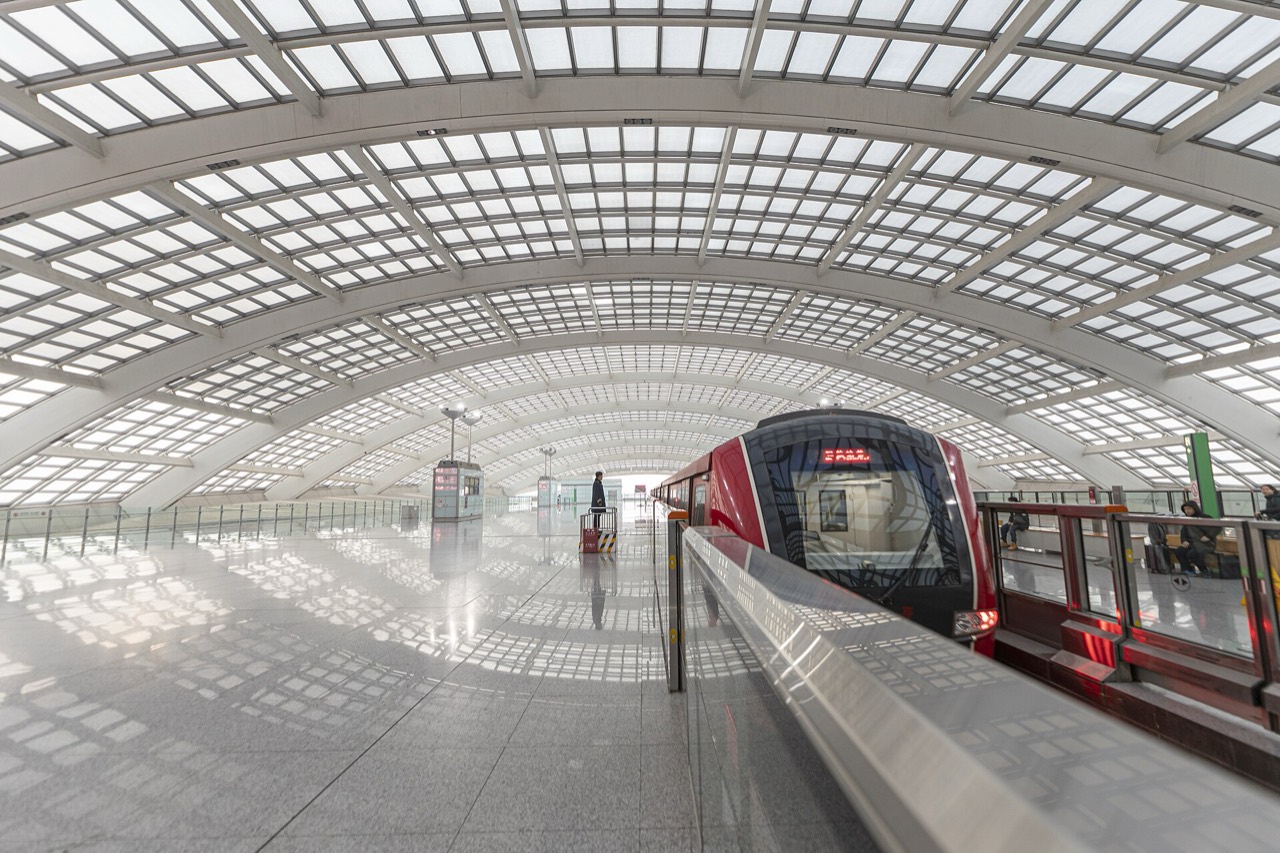
Same national picture as everywhere: a widening list of passports enter visa-free for 30 days, most others can use 240-hour visa-free transit — check yours against the visa guide. Beijing has two airports: Capital (PEK), closer in, with the Airport Express rail link to the metro; and Daxing (PKX), the vast starfish far to the south, connected by fast rail but a long haul to Sanlitun — check which one your ticket says, both directions. First-night mechanics: your first 24 hours.
Money, phone, getting around
Alipay or WeChat Pay linked to your home card before you fly (set-up guide); a travel eSIM for data that ignores the firewall (what’s blocked); the metro plus Didi for everything (how). Beijing-specific: distances are vast — “near” on a map is 40 minutes door-to-door — so cluster each day’s plans by district, and carry your physical passport for the Forbidden City, Tiananmen area and hotel check-ins. Tipping does not exist.
Safety & health
Street crime is a rounding error; your real risks are traffic, chilli oil and over-ambitious itineraries. The LGBTQ+ texture is in the safety explainer; emergencies run on 110 (police) and 120 (ambulance), with the full playbook in the emergency guide. Drink bottled water, buy insurance you intend to waste, and pace the Wall day — it’s a workout.
What it all costs
Mid-range by Chinese standards, absurd value by Western ones: ¥100 into the country’s biggest gay club, world-class museums for pocket change, five-stars from US$150, duck feasts under ¥200 a head. Budget lines in what a gay China trip costs; route it into two weeks with the itinerary.
The bottom line
Chengdu gives you the warmest queer scene in China; Shanghai gives you the most polished; Beijing gives you the deepest — one indestructible club that has outlasted every crackdown, redevelopment and pandemic thrown at it, set in the most staggering sightseeing city in Asia. Come for the empire, plan one big Saturday at Destination, walk Houhai at dusk with someone whose hand you’re not quite holding, and you’ll understand the capital’s particular register of queerness: unadvertised, unhurried, and very much still standing. 目的地 means “destination”, after all — twenty-two years on, it’s still exactly that.


